“I continue to be surprised”:
Téa Obreht on her career as a writer
August 26, 2026
Edouard Vuillard, “The yellow curtain” (c. 1893)
Few writers have entered our cultural consciousness with Téa’s velocity. In a single year, for her debut novel, she simultaneously claimed the Women’s Prize for Fiction as its youngest-ever recipient and ranked as a finalist for the National Book Award.
If you’ve read her work, it will be easy to understand why. I was delighted, when we spoke, to learn more about the journey that made it all possible.
Jana M. Perkins, PhD
Host, Women of Letters
Téa Obreht is the internationally bestselling author of The Tiger’s Wife, Inland, and The Morningside. Her novels have won the Orange Prize for Fiction, been a finalist for the National Book Award, won the Southwest Book Award, and won the Dylan Thomas Prize. Her work has appeared in The Best American Short Stories, The New Yorker, The Atlantic, Harper’s, and Zoetrope: All-Story, among many other publications. Originally from the former Yugoslavia, Obreht now splits her time between Wyoming and Dublin.

How did your childhood shape your ideas about what work looked like and what was possible for you?
Téa Obreht: I was born and raised, for the first seven years of my life, in the former Yugoslavia. My dad was in the picture for only the briefest second at the very beginning, and then my parents split. So the people who raised me were my mom and my grandparents, with my maternal grandfather as sort of head of the household.
Because it was a socialist system, the prevalence of work as something around which the family is structured was really, really strong. There was an understanding that everybody in the family had a job to do. My mom was an economist. My grandfather was an engineer. My job was to get straight As until such a time as I could parlay those straight As into a stable and decent paying job, and that was the understanding. It was, “We expect you to do your part. You’ve been given this stable family structure, and the requirement from you is that we’re gonna need these results.” Which I think is a pretty common story that immigrant children tell. So I understood that the expectation was to work as hard as I could, and to sort of push myself as far as I could toward absolute academic success, and that this would then translate inherently into absolute professional success. That was the path, right?
I started very early on having leanings towards storytelling, towards drawing, painting, the arts. When I expressed my interest, by then we were living in the States. When the war started, we moved from the former Yugoslavia to Cyprus, then to Egypt, then we ended up in the States, just my mom and me. By that point, I had skipped two grades within the British school system. Working in a second language, there was a lot of academic excelling going on in the humanities; not so much in math.
When I expressed my interest in becoming an artist, and I was like, “No, I really, really do want to go into creative writing,” my mom was like, “Okay. Well, I expect the path to be the same.” Like, “You will go and study this thing to the upper limit possible, and then you will find the vocational equivalent of that, embed yourself in it, and get a decent, stable job.” So it’s the same whether it’s the arts or STEM.
At that point, even though I had had an interest in zoology as well, they’d seen the way I did with math and science. They were like, “There’s no point in pushing this kid in that direction at all. Let her do this thing, but let it be within the parameters that we expect.” So that was how it went. My entry into creative writing as a profession was from this academia-to-job path, which was like, “You want to do this; there’s a school for that. You go to school, then you can do the thing.”
Jana M. Perkins: I’m really struck by this early reaction you had from your mom. I feel like what’s more typical is that people don’t get a lot of support when they indicate an interest in the arts. Even if there is kind of like an, “Okay, sure: you can do that,” there’s almost never this proactive support towards like, “This is the blueprint, and here’s how we’re going to get there.”
Téa Obreht: I was very, very fortunate. My mom’s a very practical person, and I think that she got that from her parents, as well. This idea of like, “Well, that’s nice—that feeling you have about something is nice. But how is it going to materially come into your life? How is it going to help stabilize you? How will it make you independent?”
I was very, very fortunate that her approach to the arts was that, too. It was like, “Well, people are writers. How do they become this? Go forth and do the same.” The fact that it was a practical rather than emotional support, I think, went a very long way toward getting my feet on the ground.

You were born in what was then Yugoslavia, grew up in Cyprus and Egypt, immigrated to the US, and now divide your time between the US and Ireland. As someone who is also from former Yugoslavia, and has also moved around a lot, I’d be curious to hear: where do you most identify with now? Or do you find that place is an important part of your identity?
Téa Obreht: I’d be curious to ask you the same thing. But let me put it like this: the mandate in my day, moving around—and within the context of my family—was assimilation. Which I think is often the mandate.
That was particularly easy for me, on the surface, because I was good at languages. I was able to speak without an accent, and English came to me pretty easily, and I was white; not everybody in my family is white-presenting. So for a long time, I was like, “Well, I’m American now. I’m here.” As I became older, certain intrinsic cultural values—cultural norms, certain idioms, ways of thinking, ways of viewing the world, speaking about it—came to the forefront, and it became clear to me that I was not as assimilated as I had thought, and maybe as I was supposed to be.
So I feel very culturally Balkan. At the same time, I left young enough, and the area has moved on so much politically and culturally since then, that when I go back it’s not the place that it was when I left. I like to think that I feel pretty at home almost anywhere, and that the feeling of belonging—there’s a very, very narrow margin for the feeling of belonging, right? I’ll belong to a particular community in a place, or I’ll belong to a particular neighbourhood of a city. I think that that narrowness has to exist. The rest is so diffuse that those narrow pockets are where the identity comes from. Do you feel similarly?
Jana M. Perkins: So, I’ll preface this by saying that I recently moved back to Croatia.
Téa Obreht: Amazing.
Jana M. Perkins: We moved to Canada when I was two. I grew up in Canada; I lived there for most of my life and did my PhD in the States, so I’ve lived in a lot of different places. But I never felt that I belonged in Canada.
It never felt like my place. I never felt like I could figure out what was expected of me, or that I could fit in. Whereas, here, I really strongly feel that way, and that was a big part of why I did want to move back.
What’s the first thing you remember being good at?
Téa Obreht: Language. Language and memory, like remembering.
I was really, really good at memorizing poems and songs, which I think is how I learned English. My grandfather would bring these bootleg Disney tapes from Italy, from Trieste—I’m sure you know that pipeline. And I would watch them until I had memorized them.
So my first entry into English was this sort of memorization of the dialogue of films. I knew the context a little bit, but I could watch a movie like two or three times and know the whole thing all the way through. It could get awkward, because I would respond in these lines of dialogue for a few years, when I first started communicating mostly in English. But I had a great aptitude for memorization, particularly when it came to language.
Fast-forward to today. How did the path to what you’re doing now unfold?
Téa Obreht: It unfolded sort of miraculously. I did go to school for creative writing; my mother’s prescription turned out to suit me very well.
I went to USC, where I studied creative writing and art history. She was like, “Please learn one more practical thing.” I was like, “Art history is it. There’s loads of jobs when you have an undergraduate degree in art history; just loads of museums, looking for me, straight out of college, with just the bachelor’s, to curate their exhibits.”
Anyway. I did creative writing as an undergrad, and then around the end of my junior year I learned that you could level up; you could go to a master’s program, and you could continue to learn this thing. Sort of what had been hammered home for me was like, “You must be a student for as long—like, you haven’t learned the thing until you have completed your time as a student of it.” Naturally, I was like, “Well, I’ll go to grad school for this. Obviously, that’s the next step.” So I went to Cornell, where I formed a lot of really meaningful friendships with people who are still very important in my life to this day.
I started working on my first novel, The Tiger’s Wife, while I was there. It was interesting, because part of the assimilation process was like, “We don’t talk about the Balkans.” The war was very, very fresh. We were a family of mixed ethnicity, which was difficult to explain to people. People would ask about it, and my mother, in order to sort of prevent me from dealing with uncomfortable questions, was just like, “Just say ‘I don’t remember. I don’t remember, and I don’t want to talk about it.’” And I’d be like, “Okay.”
When I got to grad school, I wrote a short story called “The Tiger’s Wife” that was set in the Balkans. It was the very first thing I had written about back home, precipitated largely by the sudden and very surprising death of my grandfather. I guess it wasn’t that sudden; he was dying of cancer for a long time, but in typical Balkan fashion told nobody, so we were all surprised. That was a real turning point for me.
The short story was terrible. It was terrible because it was short, and I started growing it. It was the first attempt that I made at writing like a proper, true novel. When I was about halfway through it, a colleague from my cohort shared a piece of it with his agent and was like, “This kid is working on this. I think it’s pretty good.” My agent, Seth Fishman, reached out to me and was like, “Hey, I’d like to sign you.”
Like a year later, I finished the book and he sold it at auction. For not a ton of money—this was 2008, so the crash was in process—but it was his first sale: my first book, his first sale, and the acquiring editor’s first acquisition. We were all babies together. And then what happened was the book took off in this way that nobody could have predicted, and nobody foresaw. That was a complete and total shock to me, and I was very unequipped, because I was like 25. You know? To just process and absorb it all.
It set me on the path that I’m on today. It enabled me to turn my attention full-time to writing, to teach at some of the finest programs, with some of the best students anyone could have the privilege of working with: at Hunter College, at Texas State, at Bennington now. It really set me up for life as a full-time writer. That’s been an extraordinary gift.
Jana M. Perkins: What a wonderfully serendipitous series of events. I did know some of this history, but I didn’t know that it was a friend of yours who initially got the ball rolling on the submission process.
Téa Obreht: He was like, “I think you’re ready. I think I’m just gonna do this.” And I was like, “Okay.” A lot of the most serendipitous moments in my life have come from me just being like, “Oh, okay. I guess you know best.”
Jana M. Perkins: No, but kudos to you for being open to that. And saying, “Yes: I will go along with this.”
Téa Obreht: I think it was also especially serendipitous that everybody in my year was looking to do the same thing. Nobody was there at the MFA in sort of an exploratory capacity.
I was the youngest person in the class, by a lot. It was a four-person class, because Cornell only takes four. I ended up there for very practical reasons, which was that it was a fully funded program. Something that I had been taught from the beginning was like, “No debt. Whatever you can do, don’t incur any debt.” So it was like, “Fully funded—great. That’s the answer.” And my mother’s heard of Cornell. But everybody in that class had left behind a career to pursue creative writing seriously for the first time, so there was a tremendous amount of drive in the cohort. Everyone was like, “I must succeed at this.”
As professors often do, with very good reason—as I have often done myself as a professor—we were discouraged from thinking about publication. But our particular DNA as a unit was like, “We must make a real effort at this.” There was a tendency between ourselves to drive one another that way, and that was also very serendipitous.
Your work has been widely celebrated, including through a whole host of awards, beginning with your very first book. When you were asked by The Guardian to describe what it was like to win the Women’s Prize for Fiction, or what was then known as the Orange Prize, you said that, “Winning gave me the emotional license to think of writing as my work. That was invaluable.” What had you thought of writing as up until that point? Had you always expected that you would have another job in addition to writing?
Téa Obreht: I had expected that I would fail. I had expected that I would try and that I wouldn’t make it.
Whatever that meant, because I didn’t know very many writers and I didn’t know what a writing life really entailed. By the time I got to grad school, that was the first time that I began to be surrounded, through the resources of Cornell, by working writers. What that meant was a lot of sacrifice, a lot of alone time. People would come through—I mean, my first year in the program, George Saunders came to talk to us. Salman Rushdie came to give a talk. It was extraordinary to see this ecosystem of writers, and to be like, “Well, clearly this is for other people. I’m playing at this, and I will soon discover that I don’t have the ability to do it, and I will go back to my corner, and this will continue without me, and I must be prepared for that, and I have to have something else.” Like, “I have to be ready to do something else, like art history.”
But then when I won the Orange, it was like, “Oh, maybe you can do it. Maybe this is something that actually is possible for you to make a full-time part of your life.” And that was an extraordinary surprise. I also loved doing it, and I didn’t know that you could love to do something and make it your work.
Jana M. Perkins: I’m from the generation where the opposite was expected of us—it was like, “Find what you love, and make that your work.” Which, to me, is setting somebody up for disaster. I think it’s very difficult to succeed when you go in with that mindset. So I’m really struck by your having had the opposite path to it, of like, “I’m doing this professionally, and it is something that I enjoy, and it’s incredible that I can make money off of that.”
Téa Obreht: It’s so strange how the generational approach to work and passion is always slightly out of step with the economy that’s meant to support it. It’s always like, “The youth are coming up, and they must be happy, so we will tell them that they must love what they do; that they should do what they love. And what we’re going to do is overrun the economy with machinery, and not give them any job stability whatsoever, and just be like, ‘Here: do what you love in this crumbling space.’”
Did you have any mentors along the way?
Téa Obreht: I did. I was lucky to have three very concrete mentors.
T. C. Boyle taught me when I was an undergrad, and he was just the most fantastic supporter while at the same time not being an effusive supporter. He was very matter-of-fact about writing as a craft and a discipline, and was like, “You’re talented; do this to increase the degree of talent.” At the time, in particular, I think it was especially important for me to have that sort of practical mandate, of like, “If you do this and you read these books, you will understand what it is you’re trying to do.”
Stephanie Vaughn, the late Stephanie Vaughn, who was my teacher at Cornell, was a tremendous mentor, particularly when it came to teaching. She was enormous; there was this mythos around her. She had written this short story collection early on in life, like when she was 25 or 30, and then she had never written again. She had been teaching there for many, many years; by that point, she was in her late fifties. There was this like, “Stephanie might be working on something. Maybe there’s a novel coming.” So there was this mythos around her, and everybody flocked to her as kind of like the den mother of the group. She was incredibly supportive of everyone, regardless of department politics. It was really important to see that as what a figurehead of a community could do. She was also very kind; she was just very kind, and she cared for us.
Then when I started working at Hunter, my boss there was Peter Carey: the two-time Booker-winner Peter Carey, who became a friend, but whom I also consider sort of my absolute lodestar when it comes to morality and the philosophical approach to writing. Sort of how to be zen with what is in your control, what is outside your control as a writer, how to live as a writer, and how to live with yourself as a writer. I’ve had great luck with mentors.
Tell us about some of the projects, ideas, or questions you’re currently working on.
Téa Obreht: My fourth novel, Sunrise, is out. I’m very excited about it; it was a real blast to write.
I continue to be surprised by how my books all sort of come back to some of the same questions, like death anxiety. There’s a lot of death anxiety in my books, and I think I’m always interested in folklore on the one hand and myth-making on the other, and how personhood gets rolled up in that.
You could have folklore without myth-making, and you could have myth-making without folklore, but at some point both can hit a person at the same time—you can live within sort of a folk way, and have myths made up about you. How do you respond to that? How do we work with the beliefs that we’ve been brought up with, especially when we come to see that they aren’t reflected in the world around us? I think that’s a big question that my work deals with.
I’m always working on a couple of short stories, and a couple of novel beginnings, and, without fail, they always manage to find a way to trickle back to that. David Mitchell calls that the whack-a-mole themes. Those are my whack-a-mole themes.
How do you get your work in each day? What does that process look like, and what are the conditions that help you perform at your best?
Téa Obreht: Fear that, if I take too long, I’ll perform at my worst. Fear is always a motivating factor for me.
When I’m not working—I actually recently heard Ann Patchett say this, too, and it was enormously gratifying to hear her say it. Basically, it’s like, “When I’m not working, I want to give myself the permission to say, ‘I’m not working.’” I’ve recently come to terms with the fact that that should be the case for me, as well. When I’m not working, there’s a lot of guilt about not working, but a lot of a writer’s work happens in their head. I think it’s taken me many years to accept that.
You’re reading a lot of things in this particular area; you’re visiting this place over and over again, both physically and in your mind. You’re toying with language that has to do with this very specific concept. You are working; it’s just not on the page. So to accept that kind of still period as a part of working has been challenging, but I think I’ve gotten there.
When I’m writing, I treat it like a job. I go in every day. I’m a mom now, to two little daughters. When the childcare situation happens—when they go to daycare, or when grandma comes over—you go to the library and you work. That’s work time. I used to be freer to do that through the night; I was a nighttime writer, and I used to really treasure the solitude of nighttime writing. Now, it’s like banker’s hours. Maybe not the whole stretch, but a goodly amount.
Actually, on the topic of fear—I’d be curious to hear. In an interview you once did for The Financial Times, you were asked, “What are you scared of?” And you responded by saying, “Complacency and disenchantment.” Tell me more about that.
Téa Obreht: I am afraid of complacency and disenchantment. I’m afraid that, with respect to complacency, I’ll sort of be like, “Well, I wrote it. It’s good enough.” And that achieving a certain comfort with my skillset will stop me from continuing to develop it. That I will cease to grow as a writer, that I will cease to challenge myself as a writer, because, “Oh, I took on too many projects. It’s fine to just dash this off, and it’s good enough, because it’s me.” That is a really terrifying notion for me.
Disenchantment—I’m afraid that I’ll stop loving it. It’s idyllic, but it’s not easy to write, to be a writer, when writing is what you want to do, because there’s a whole segment of it in which the project leaves your hands and becomes its own entity. That part is really terrifying. Some people love it; some people don’t. The people who don’t, in this day and age, have the ability to access you and let you know all about it.
Part of a writer’s life is the public persona. I never ended up on Twitter, and I’ve been very lucky; I don’t have the constitution for that. There are writers I know who build their whole persona on interacting online, and I can’t do that. It feels like there’s a kind of a missed opportunity there, but at what cost to your sanity.
So I’m worried that those sort of extraneous things—that the other part of the job—will erode my ability to enjoy the part that is in my control, that is the part that I feel is the most important thing. So far, so good. But who knows what new technologies will be made available? I mean, now that I’ve brought up new technology, the rise of AI is a really, really, really exhausting prospect. It’s deeply demoralizing; it’s deeply dispiriting. The encroachment of AI into the creative space is something that’s so soul-crushing to me, as a working writer, and as someone who teaches young people. That’s something that has the ability to disenchant.
What do you typically like to read, and what are you reading now?
Téa Obreht: I really like to read fiction; I do. I read a lot of, also, longform nonfiction, but fiction’s the one for me.
Right now, I’m reading Villa Coco by Andrew Sean Greer, which is just delightful—delightful and a deceptively well-crafted comfort read. It makes you feel like, “Oh, this is just a lovely, breezy read.” And it isn’t; it’s a feat of engineering, and I love it.
How do you decide which opportunities to pursue and which to pass on?
Téa Obreht: I pretty much accept all opportunities, because I am afraid of passing up anything. Everything feels really precarious to me still.
It’s been very rare that I’ve passed up an opportunity, because I always think of it as like, “This could be the one that—I don’t know what. You could regret this very much.” The next year, when you’re like, “Oh, I didn’t take that brief teaching gig,” or, “Oh, I didn’t do that interview,” or, “I didn’t go and meet this person.” Like, “That would have been like a real pivot point in your life, and you wouldn’t even know it.”
Most of the time that’s how life changes, right? So, really, you should say yes to everything. I’ve been trying to be better about saying no to things that will tax me in predictably awful ways. If I know that I don’t have the bandwidth to do something, I should say no to the next thing that’s asked of me so that I don’t half-ass the things that I’ve already committed to doing. That’s about the limit of my ability to say no.
Jana M. Perkins: Where do you think the sense of precarity comes from?
Téa Obreht: Immigrant parents. I think it comes a lot from that sort of instilled work ethic, of like, “This is your role in the family. Your role is to advance the family in this way.” If I say no to something, it often feels like something I’m passing up from my comfort, and that feels wrong.
Jana M. Perkins: I’m so struck by this, because you’re truly one of the few writers that come to mind for me where, I look at your body of work, and I say, “If she never wrote another thing, she would be set; she’s already accomplished so much.” You, for me, are already in the strata that you described your professor at Cornell being, of like, “There was all this mythos around her; she wrote one thing, and that was it.” I’m like, “That could be you. You have done so much already.”
Téa Obreht: What a thing to say. Like, thank you for making my month. I do often ask myself, in the dead of night, “If you died right now, if you died in your sleep tonight, would you be okay with what’s left in terms of the work?” Thank you for saying that. That means a lot.
I’ve had the extreme good fortune of being able to write books that I felt very passionately about, to be able to take my time to arrive at the work, to get the books into the shape that I want them to be. I’m proud to be able to say that I truly believe that, everything I’ve published, I’ve known was the best of my ability at the time. I have quibbles—you could have quibbles with your work afterwards, and be like, “Oh, now I would have done that a little differently,” or, “I would have phrased that a little bit differently,” or, “I would have cut that character,” or whatever. But I’m pleased with my body of work, and I’m grateful to you for saying that. Thank you.
Jana M. Perkins: I mean it. You’re very welcome.
When you think of women who have inspired or influenced you, who comes to mind?
Téa Obreht: In terms of writers, I would say writers like Annie Proulx or Toni Morrison. People who took their time to arrive at language and storytelling in a manner that suited them, and that had nothing to do with the ambient trends of the time, trends of the moment.
I am a huge admirer of Yiyun Li, whose work is so tremendous, and who uses writing in such a profound way to detail the emotional experience of being herself and being in her particular circumstances. To be able to do both, to be a tremendous stylist and to be able to access your interiority that way, and so rawly, is huge. I’m a massive admirer of her.
In terms of public figures, I admire people like Ms. Rachel or Francesca Albanese. It’s very difficult to be a woman, or anything other than a cishet man, and be in the public eye, and stand behind your morals so fearlessly, to such a degree, facing such backlash all day, every day—it must chip away at your personhood to a great degree. These two people are so unmoved by forces that don’t deserve to move them, and they stand for something, and that’s so admirable. I think it’s kind of the only way to be a public figure right now and look yourself in the mirror.
How has your definition of success evolved over time?
Téa Obreht: I wish it had evolved more, but I think it’s broadened now.
I used to think that my definition of success was like professional success, right? In order to be successful, you must be able to claim professional success. Luckily for me, and also unluckily for me, I am in a field where linearity in that is very slippery. You can have a really good book that doesn’t sell well, or you can have a book that sells well but that you feel strange about, or that tore you away from family members. There’s not one graph on which all the data fits. And I’d like to congratulate myself on my first mathematical analogy that I’ve ever made.
I have a lot of really good people in my life. Really good people, and from all walks of life—from all times of my life—and they offer support and encouragement, and their presence, I feel, is an enormous success of mine. That I’ve gathered them under this umbrella of my loved ones is really moving to me, and I consider that a success.
I’m also very proud of my teaching: the fact that I’ve been allowed to be a person of some influence in the lives of students, who then go on to do tremendous things in all walks of life, not necessarily just writing. That I’m allowed in some way to be like, “I have some advice,” and then they follow that, or that I’m a person to whom they return sometimes. That feels enormously successful to me.
What book have you most often gifted to others?
Téa Obreht: It has to be The Master and Margarita. I feel like I talk about it in every interview, and I’m so sorry to bring it up again, but I think it’s The Master and Margarita. Whenever I hear that someone hasn’t read it, I’m like, “Oh, I have my stash of copies.” It’s a tremendous book.
I think more and more people are reading it. I think it’s come into fashion again, in a way, and I’m finding more and more that people have read it, so I get the opportunity to recommend it less, but still. I always start with that.
Jana M. Perkins: What is it about that book that makes you eager to put it in someone else’s hands?
Téa Obreht: I think it’s the emotional experience of the book. It’s one of the few things that I’ve read in my life that feel as moving as music. It operates on more than just the level it’s intended, so my bond with it is very strong.
It’s funny because there are very few things I can quote from it. I figured that out recently, where I was trying to remember a line, and I was like, “I should know that line by now. I’ve been reading this book for like 25 years.” So I think there’s a desire to invite someone to the emotional experience of that.
But in addition to that desire, it’s just a bonkers book that has influenced so many things. With emerging writers, in particular, who haven’t read it before, it’s always lovely to see them reading it and be like, “Oh, this is where that comes from.” Like, “Yeah, that’s where this comes from. It’s been in your life. You haven’t even known it. Here it is.”
If you were starting now, what would you do differently?
Téa Obreht: I regret being so disconnected from the experience of what happened with The Tiger’s Wife. I was so young, and I was so stunned, that my memories of that time are really hazy. And I wish they weren’t. I’d take myself by the shoulders and say, “Okay, but just be in this moment. Right now, be in this moment where, like, ‘Oh, you’ve just won the Orange Prize.” Or, “You’ve bumped into someone on the subway and they’re reading your book. This doesn’t happen to everybody. This won’t happen with every book you write. This is a unique moment, and you should dwell in it.”
I think I was just sort of trying to get through it. My memories feel hazy and rushed, and I would do that differently.
Jana M. Perkins: No, but to your credit, that’s also very much the Balkan mindset. “Don’t pat yourself on the back.” “Nobody look at me.”
Téa Obreht: Oh, “Put a stone in your shoe so that you’re the source of your own discomfort.” You know?
What keeps you going?
Téa Obreht: I think the curiosity of what comes next.
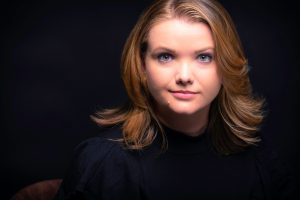
Photo credit: Ilan Hare
I have a huge sense, maybe from having moved around so much, that things are temporary. I’m often like, “Well, something new is coming.” That can be a huge lifeline for my own personal experience of writing, because I’ve had to put books away, and that’s a terrible feeling, but something new is coming. You survive it; you write again.
You get stuck in a particular place in your life, mentally or emotionally—maybe something new will come. That’s been enormously helpful. That’s been sustaining.
Where can our readers find you?
Téa Obreht: You mean online?
Jana M. Perkins: One of our previous guests, Ayşegül Savaş—her response was, “In my novels and short stories.” I was like, “Mic drop answer.”
Téa Obreht: I love that. I mean, that is the truth, but I can’t steal it.
Your readers can find me being a motley personality on Instagram at @teaobreht. Also, when I’m in Wyoming, they can find me at the Teton County Library, in the chair by the fireplace, writing something new.