“I’m still refining this”:
Tajja Isen on her career as a writer
September 9, 2026
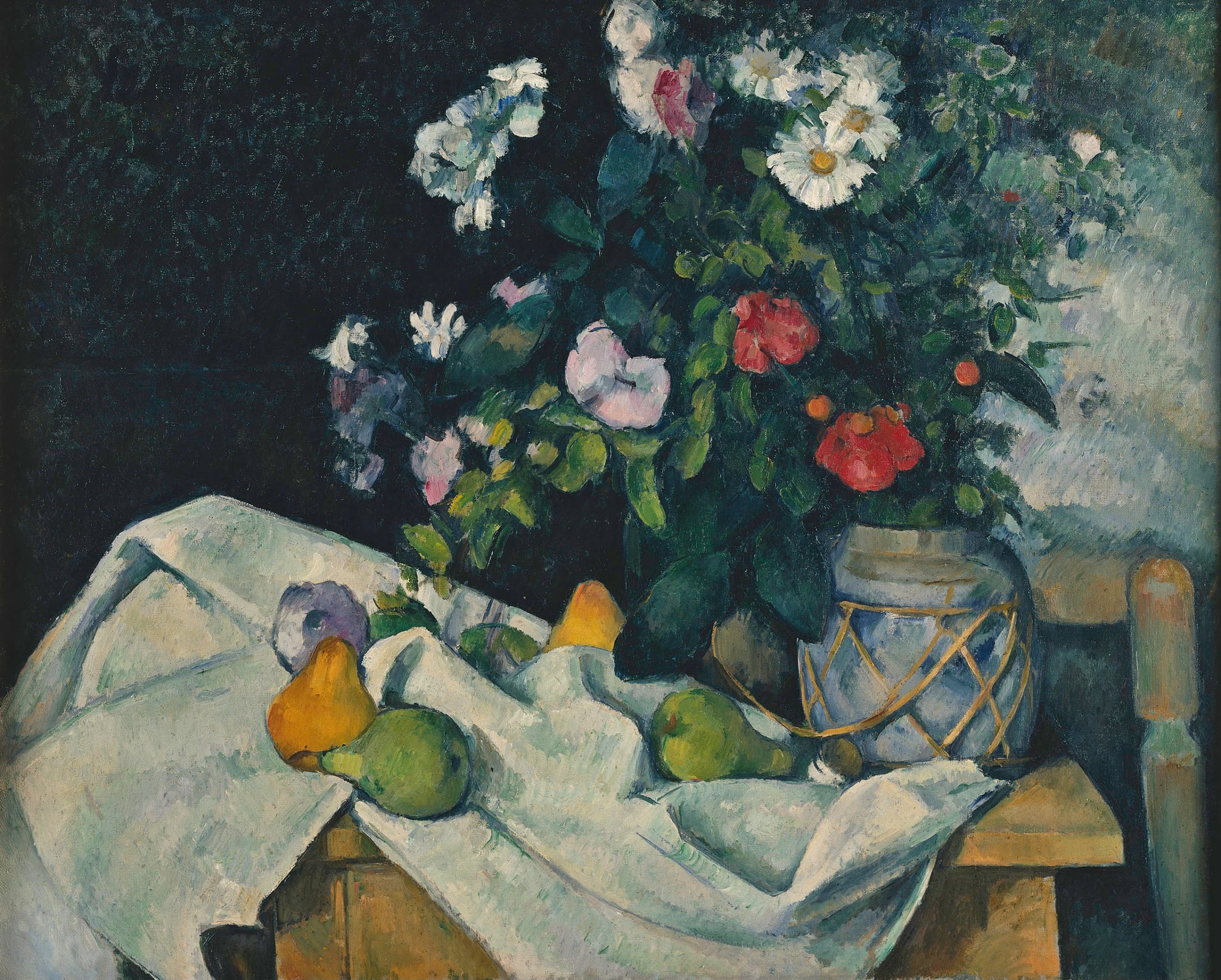
Paul Cézanne, “Still life with flowers and fruit” (c. 1888)

Longtime readers will know just how often I like to ask about mentorship during these conversations. You can imagine my delight, then, at discovering Tajja’s forthcoming memoir, Tough Love, which is dedicated to the topic.
As she explains, the book is about “my chronic habit of falling into intense, complicated relationships with authority figures, and how I eventually learned to stop overinvesting in those bonds and develop my own concepts of selfhood and artistry.” It was a joy to learn more about her path along the way.
Jana M. Perkins, PhD
Host, Women of Letters
Tajja Isen is the author of the memoir Tough Love: A Lesson in Mentorship and Submission, forthcoming in spring 2027. Her first book, the essay collection Some of My Best Friends, was named a Best Book of the Year by outlets including Electric Literature and The Globe and Mail. She is also the co-editor of the anthology The World as We Knew It. Her writing has appeared in outlets including The Atlantic, Vulture, and The Walrus, where she is a contributing writer and where her work has twice been a finalist for the National Magazine Awards. She has received fellowships from the Black Mountain Institute, the Ucross Foundation, and the Sewanee Writers’ Conference. Originally from Toronto, she lives in Las Vegas, Nevada.

How did your childhood shape your ideas about what work looked like and what was possible for you?
Tajja Isen: My childhood shaped my ideas of work in very idiosyncratic and specific ways, because I was a child actor.
I mostly did voice-over work for cartoons, but also some on-camera and stage gigs, including a stint as Young Nala in the Toronto production of The Lion King. In spending my childhood in studios and on stages, I got to see and interact with adults for whom performing was a full-time job. I loved watching the women backstage at The Lion King; the way they’d sweep into the dressing room, shed their coats, and start putting their hair up. I still had to go to school, but to my awe and envy, this was their life. That was my earliest model for being a working artist, and it was how I learned to think about creative work as a viable possibility for a future.
I also think that my early work as an actor—especially coming up in animation, during a real boom time in Toronto, both for the form itself and for young actors—gave me an unusually rosy view of work, which I’ve had to revise as an adult. I never thought to doubt, for example, that every job would always be perfectly in alignment with who I was and how I wanted to be seen. I thought—I absolutely took it for granted at the time—that with every job came a strong union.
The toughest way in which the wool was pulled from my eyes has been realizing that the years between age ten, when I started working, and, say, the pandemic, was the only time I worked in a field that was robust and thriving; where getting a job was not a matter of scarcity. I’m grateful for those years. They were some of the best earning years I’ve ever had, and I was working entirely for myself. Not coincidentally, it was also the time when I had my healthiest relationship to work.

What’s the first thing you remember being good at?
Tajja Isen: Reading. Before school began in earnest, I thought of reading as a state of absorption more than something one could gamify. But, early in first grade, when the teacher realized I was reading at a higher level than the other students, I grasped that it was something I was good at—and that I could use to show off.
While the rest of the class sat on the carpet, waiting for Mrs. M. to start the lesson, she took me over to a computer terminal and told me I could spend an hour amusing myself by noodling with a text-to-speech program. I think she thought I’d mess around and teach myself to spell a few words. I don’t think she anticipated that I would turn the volume dial up as high as it went, type Hello Mrs. M., start laughing maniacally, and interrupt her in the middle of her lesson. She bore it with good humor, bless her.
The principle I took from this was that if you were sufficiently good at something, then you’d be allowed to bend the rules. This became my MO as a student—even as a younger person. It passed into my personality more than it’s comfortable to admit. I had a lot of anxiety about obedience and rules, and then suddenly I found what seemed like a failsafe. It’s no surprise I became a child actor.
Fast-forward to today. How did the path to what you’re doing now unfold?
Tajja Isen: It was pretty circuitous. I knew I wanted to be a writer, but the precarity of that path scared me, so I spent a lot of time (and money) veering away from it.
I studied English Literature in college. Originally, I thought I’d see it all the way through to a PhD. Instead, I wound up going to law school, and concurrently did an MA in English. (A lot of people assume this must have made law school worse and/or harder, but getting to explore the intersections of law and literature made the degree much more intellectually fulfilling than it would otherwise have been.)
By the time I graduated, I decided not to pursue law. I got an internship at a magazine instead, where I worked as a fact checker, and later inched my way up the masthead and found subsequent work at other publications. Since then, I’ve juggled various combinations of voice acting, magazine work, and book advances to support my writing.
Did you have any mentors along the way?
Tajja Isen: Funny you should ask! I did. I am, in fact, so preoccupied with this question that I’ve written an entire book on it. Tough Love, my forthcoming memoir, traces my artistic coming-of-age through a series of charged mentorships.
The elevator pitch is that it’s about my chronic habit of falling into intense, complicated relationships with authority figures, and how I eventually learned to stop overinvesting in those bonds and develop my own concepts of selfhood and artistry. I’m fascinated by mentorship as a relational category—the way we tell the story of it culturally; how it gets positioned as essential to success, but also how it is so wildly borderless and unstructured. This is its most volatile quality, the thing that can make it both transformative and, in the wrong hands, harmful.
I’m lucky to have had a lot of great mentors—my parents, my first voice director in animation, a college creative-writing teacher. I’m on the record talking about how the mentorship of Nicole Chung has made so much possible for me. I’ve also had some not-so-great mentors, and the book explores that kind of relationship, too. No matter the mentor, the book is less about the individual person who nurtured me, and more about what it was in me that kept drawing me toward and into those dynamics over and over. Because those relationships all had a common denominator that established a baseline for a pattern. And that was, of course, me.
Tell us about some of the projects, ideas, or questions you’re currently working on.
Tajja Isen: Even after finishing the mentorship book, I feel like I can’t quite let go of the questions of power and influence, as well as the ambivalent pleasures to be found in the way those things act upon us. I’m currently thinking through them in another nonfiction manuscript, but through a bigger-picture cultural lens rather than a personal one (even if my motivations are very personal, in ways I’m still articulating to myself on the page).
After several years of working on a book in the narrative memoir mode, it’s invigorating to return to something more explicitly ideas-driven and essayistic. I think of it as a sort of spiritual sibling to the mentorship book. This has happened with each of my projects: the previous book eventually reveals the doorway to the next one. A sort of daisy-chain of books.
What do you typically like to read, and what are you reading now?
Tajja Isen: I’m a very omnivorous reader. I like to keep up with recent releases in essay and memoir, because those are the genres I work in. But fiction makes up about half my reading diet—it was fiction that first made me a reader.
I’m finishing up a string of books, all of them novels, that were written by local writer friends in Las Vegas and all published within a few months of each other: Observer by Nicholas Russell; Dangerland! by Erin Singer; and Close Relationships with Strangers by Krista Diamond, who I’m interviewing at our local bookstore later in September. I also spent some time in Montana this summer, and I love to take travel as a reason to read books set in the place I’m visiting, so I read Amy Leach’s The Salt of the Universe and Stephen Graham Jones’s The Buffalo Hunter Hunter. I’m also currently reading, for research, Kafka’s nonfiction and a biography of Sigmund Freud. (I say “currently reading” for accountability. I’ve been two chapters into the Freud biography for months.)
What are you most proud of achieving?
Tajja Isen: Getting my second book published. Selling your first one seems impossible, and then you try it a second time and realize it’s so much easier to sell a debut. I was so staggered by this difficulty and how it structures the industry that I reported a whole piece on it last year.
How do you decide which opportunities to pursue and which to pass on?
Tajja Isen: I’m still refining this radar, and I often don’t get it right! But the questions that have been guiding me lately: is this an opportunity that will help me support a friend, and/or will I get to show up in community in a way that feels authentic? If yes, then pursue; if no, then pass.
How has your definition of success evolved over time?
Tajja Isen: I nurtured the familiar vision of success when I was a younger writer: publish a first book by or before a certain age, a book that would be explosively received and launch me into some kind of literary stratosphere. I never gave much thought to what would happen after that.
My definition of success has evolved to focus entirely on that after; a definition that values persistence and sustainability and excellence rather than some kind of spectacular launch, which can exist in tension with those values and which itself can be a pernicious fiction—see the sales track essay linked above!
Are there any skills or interests that have turned out to be unexpectedly valuable in your career?
Tajja Isen: I can’t stress enough how valuable being a voice actor is to being a writer. Not just financially, but in terms of craft.
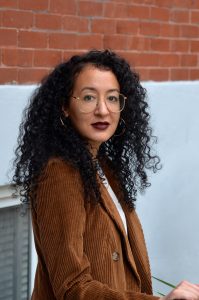
Photo credit: Karen Isen
I’ve spent years reading scripts with the knowledge that those lines would have to be delivered aloud. That has dramatically shaped the way I approach my own writing. It established some circuit or expectation in my mind that the words on the page must be imbued with a certain vitality—not, like, cartoon-level vitality. But there has to be some life there, some spark. Voice is the thing I think about most in my own work and the thing I respond to first and most strongly in the work of other people, and I draw a bright line from that to my work as a voice actor.
What’s something you’ve recently changed your mind about?
Tajja Isen: Running. Turns out it’s pretty good!
If you were starting now, what would you do differently?
Tajja Isen: I would spend less time trying to circumvent my desire to be a writer and I’d charge the fucking thing like a raging bull.
What keeps you going?
Tajja Isen: Always having a writing project on the go. Popcorn. Independent bookstores. Reading early drafts of work by friends. Knowing more new books are always on the horizon. Hikes in the desert. Spite, unfortunately—more so than I’d like. But also love.
Where can our readers find you?
Tajja Isen: Readers can find me at my website, tajjaisen.com, on numerous social-media platforms under @tajja.isen, and infrequently writing my newsletter, Creative Practice.