“I just tried being myself”:
Melinda French Gates on her career as a philanthropist, businesswoman, and global advocate for women and girls
October 21, 2026
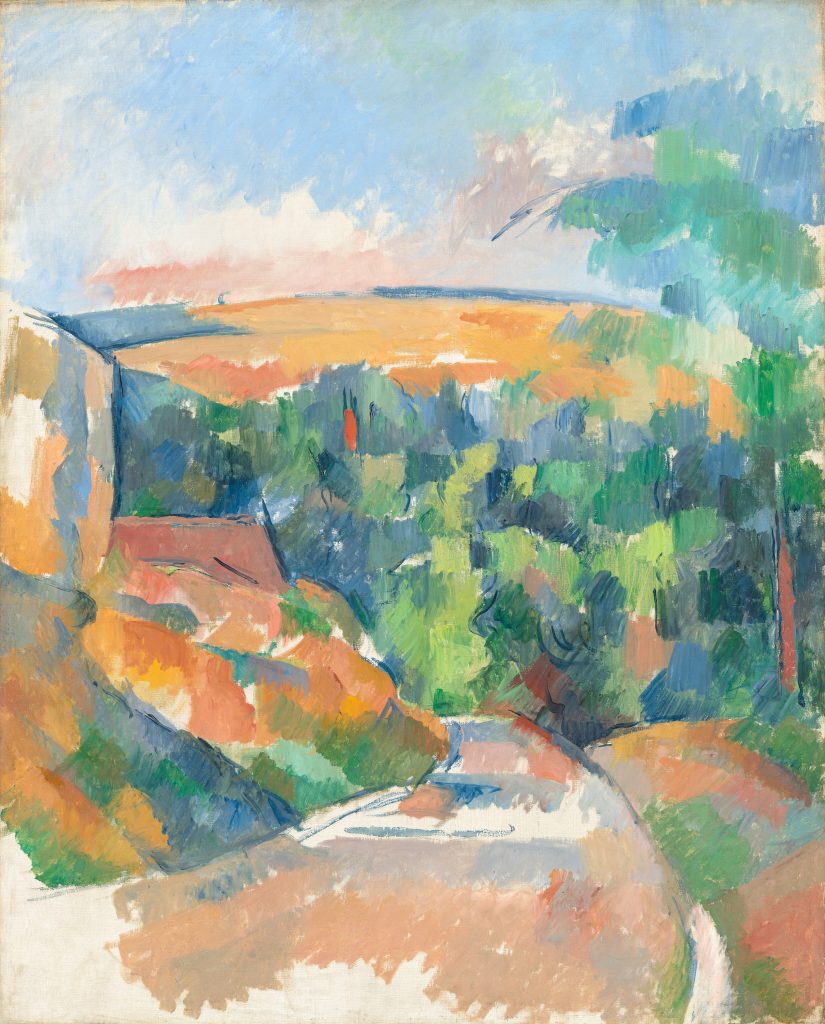
Paul Cézanne, “The Bend in the Road” (c. 1900)
Few people in history have done as much to advance women’s power and influence as Melinda. It’s common knowledge, for example, that she’s already spent decades transforming lives all over the world through the long-lasting impacts of her philanthropy. Yet in recent years she’s also been working to make even more possible for countless communities.
Her first book, The Moment of Lift, detailed how by empowering women we can change the world, and her 2025 book The Next Day extended a series of actionable frameworks for navigating the kinds of moments that can keep us, individually, from making forward progress. Both were New York Times bestsellers. Since then, she’s been expanding her work in the literary sphere through Moment of Lift Books—the imprint she created in partnership with Flatiron Books—by publishing the original nonfiction of visionaries.
A titan of women’s health and a global business leader, today, Melinda leads Pivotal, accelerating the pace of progress for women and young people around the world. In 2024, she announced an additional commitment of $1 billion to support a host of causes affecting women globally, including dismantling barriers for women in the workplace and addressing key gaps in women’s medical care.
There are more reasons than can be listed as to why Melinda is someone I’ve long looked up to. I’m thrilled beyond measure for the rare gift of this conversation.
Jana M. Perkins, PhD
Host, Women of Letters
Melinda French Gates is a philanthropist, businesswoman, and global advocate for women and girls.
For over 25 years, Melinda has led efforts to unlock a healthier, more prosperous, more equal future. Today, she heads Pivotal, a group of organizations she founded to accelerate the pace of social progress for women and young people in the U.S. and around the world. Previously, she founded and co-chaired the Gates Foundation, where, for more than two decades, she set the direction and priorities of the world’s largest philanthropy. Melinda is also the author of the bestselling books The Next Day and The Moment of Lift, and the creator of Moment of Lift Books, an imprint publishing original nonfiction by visionaries working to unlock a more equal world.
Melinda grew up in Dallas, Texas, and attended Duke University, where she received a bachelor’s degree in computer science and economics and an MBA. She spent the first decade of her career developing multimedia products at Microsoft before leaving the company to focus on her family and philanthropic work. Melinda has three children—Jenn, Rory, and Phoebe—and lives in Seattle, Washington.
You can follow Melinda at @melindafrenchgates and learn more about Pivotal here.
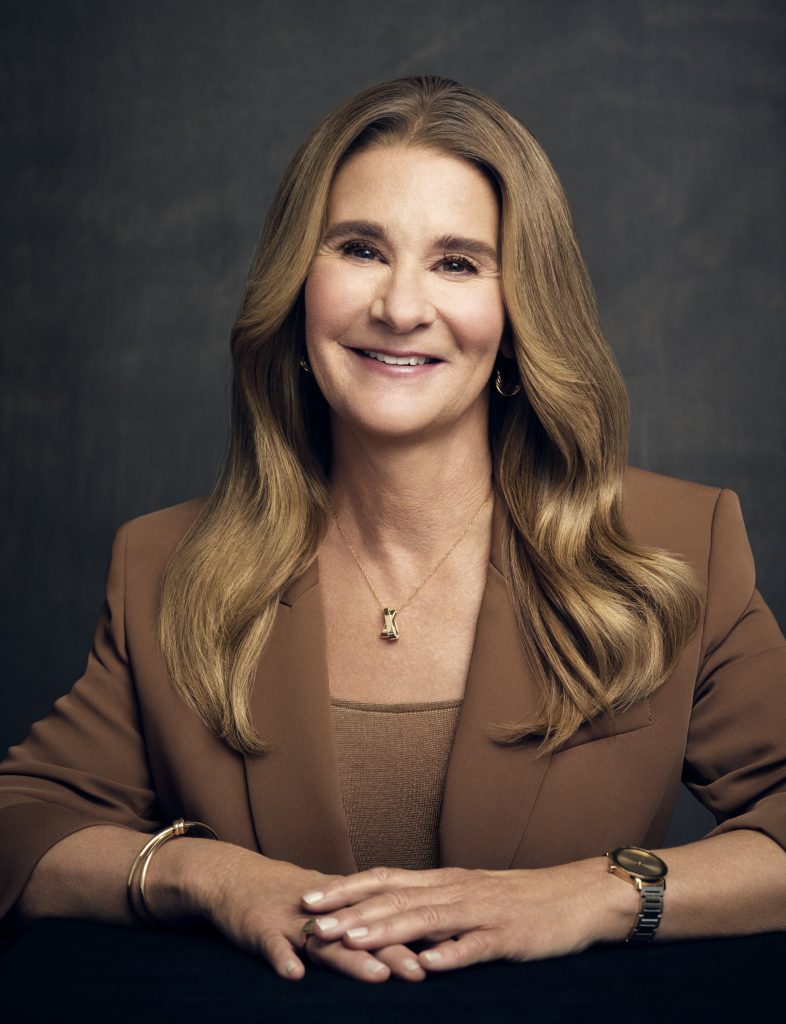
Photo credit: Jason Bell

How did your childhood shape your ideas about what work looked like and what was possible for you?
Melinda French Gates: Though I didn’t fully appreciate it then, my dad didn’t have a typical job. He was an aerospace engineer who worked on the Apollo program, so watching rockets take off was a big part of my upbringing. At a time when women working in the space program were largely invisible, he made a point of introducing my sister and me to the women he worked with, because he wanted us to know there were no limits to the kinds of careers we could pursue.
While my dad worked long hours outside the home, my mom worked equally long hours inside of it, raising four kids. Every day after school, she and I would sit down at the kitchen table and catch up over a glass of iced tea. One day, she gave me a piece of advice that is still the best I’ve ever received: “Set your own agenda, or someone else will set it for you.”
Looking back, I can see how much that advice complemented what my father was trying to teach me. While my dad encouraged me to look up at the sky and reimagine what’s possible, my mom reminded me to stay grounded and chart my own course.

What’s the first thing you remember being good at?
Melinda French Gates: Math. Specifically, computers.
When I was 14, my dad brought home an Apple II computer for me and my sister, and I was instantly hooked. A few years later, my math teacher, Mrs. Bauer, saw Apple II+ computers at a conference and convinced the principal at our school to buy a few for us. She then spent her own time and money learning computer science at night so she could teach it to us in the morning.
It’s hard to overstate the impact that her tenacity ended up having on my life. After high school, I studied computer science at Duke. And a few years later, I took a job at what was then a tiny company called Microsoft.
You could say Mrs. Bauer was the first advocate for women in STEM I ever knew.
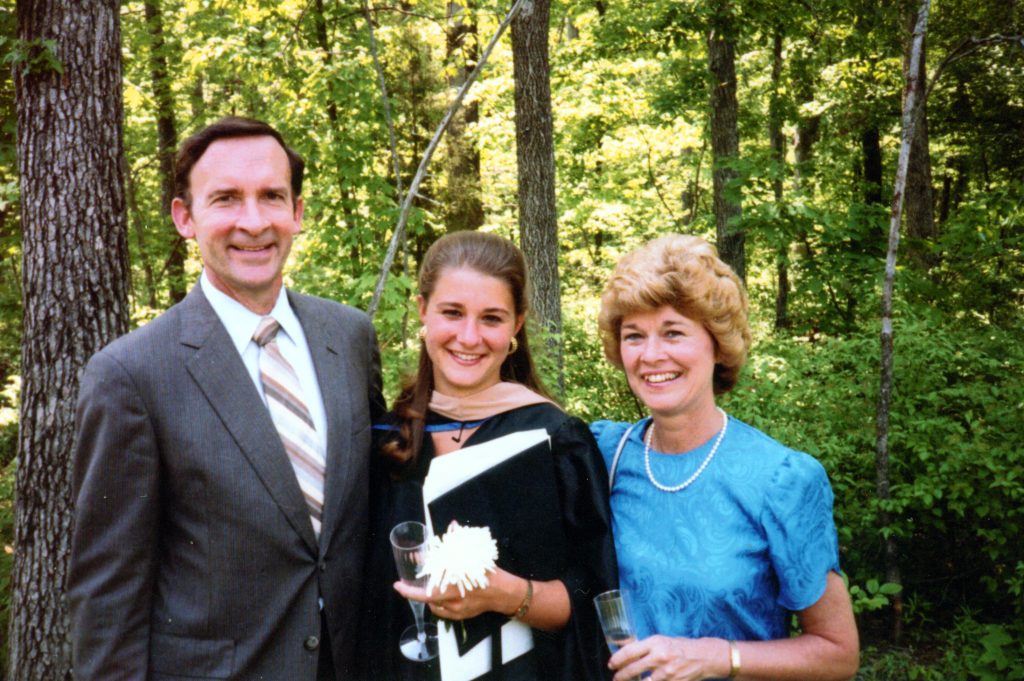
Duke graduation, 1987. Photo credit: Gates Archive
Fast-forward to today. How did the path to what you’re doing now unfold?
Melinda French Gates: In a lot of ways, my journey to philanthropy started at home.
I grew up in Dallas, Texas, where my parents were very involved with the local community, especially in the church. They sent me to an all-girls Catholic school, Ursuline Academy, that emphasized service—so much so that their motto was Serviam, which means “I will serve.” In high school, I volunteered at the courthouse, the hospital, and the local public school, which reinforced my understanding that not all opportunities are distributed equally.
So I’ve always been passionate about giving back. I just didn’t know what that would look like on a bigger scale.
That vision became clearer after I had my first daughter, Jenn. I’d left my job at Microsoft so I could be home with her, but it wasn’t long before I was itching to do more outside my role as mom. The year after she was born, my then-husband and I read a devastating article in The New York Times about the millions of children in low-income countries who were dying from diarrhea every year. While I could afford to stay home with my kids, moms in other countries were losing theirs to deaths that were entirely preventable.
We started to ask ourselves if there was something we could do to help. A few years later, we started the Gates Foundation.
I knew how much I had to learn, so I started spending time with communities throughout Africa and parts of Asia, meeting with families, health workers, community leaders, and, most importantly, women whose lives were most affected by the challenges we were trying to help solve. Again and again, I saw the same pattern unfold: When women were healthier and had more power over the decisions affecting their lives, then families, communities, and entire countries were better off.
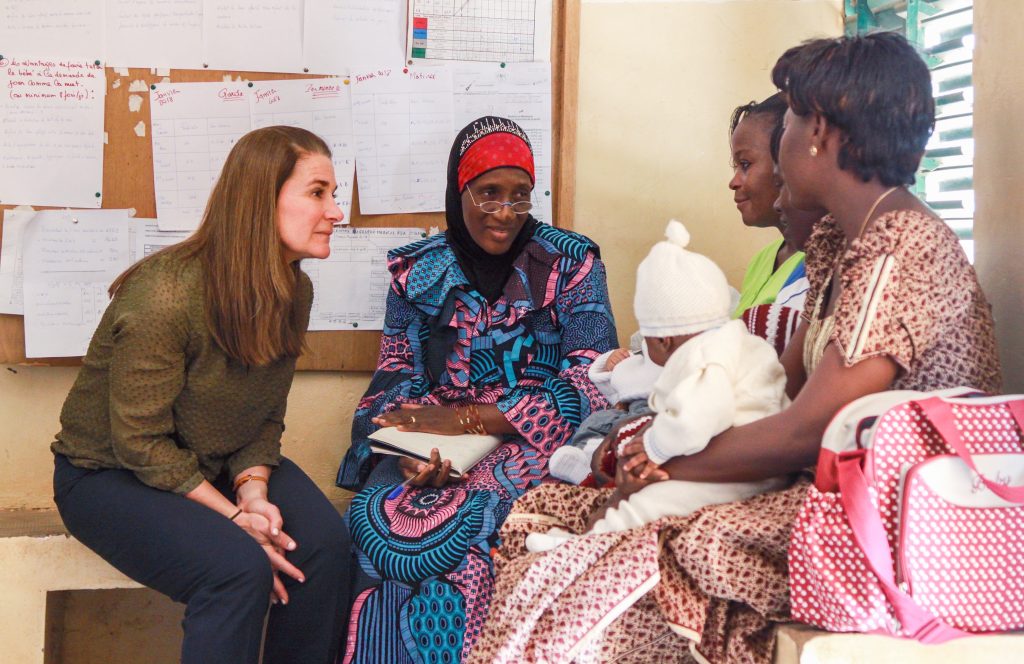
Burkina Faso, 2018. Photo courtesy of the Gates Archive
That insight reshaped my work at the foundation, and it inspired me to start Pivotal, which is now the center of my work. Through Pivotal, I’ve had the chance to partner with a wide range of people and organizations, all working in different ways to make life better for women and families.
The work that they’re doing inspires me, humbles me, and deepens my resolve to be of service every day.
Did you have any mentors along the way?
Melinda French Gates: Absolutely. One of my most important mentors was Paul Farmer, a doctor who dedicated his life to improving health care in some of the world’s poorest and most remote places. I met him when I was beginning my own learning in global health.
I’ll never forget visiting a clinic he ran in Haiti. He met me at my car when I arrived, and as we walked to the clinic, he kept stopping to talk with patients waiting outside. He gave them a hug, then asked how they were feeling and how their families were doing.
As we got closer, we entered a beautiful garden that was covered by a canopy of flowing vines. Paul mentioned he’d planted it himself.
Back then, I was spending my days steeped in global health data, trying to understand the investments that could most effectively save and improve lives. Planting a garden would never have crossed my mind as one of those investments. But Paul had taken the time to get to know his patients—so he understood that in a place with a serious shortage of health care, sick people often had to spend hours waiting at clinics in the hot sun. Helping them get well started with giving them a shaded place to sit.
Paul embodied a lesson that may sound obvious but is often forgotten: If you want to improve people’s lives, start by meeting them where they are. Spend time with the communities you want to serve and ask them directly about the challenges they’re up against. Yes, data is important. But if you don’t stop to understand what people’s lives are actually like, then you’ll never get the full picture.
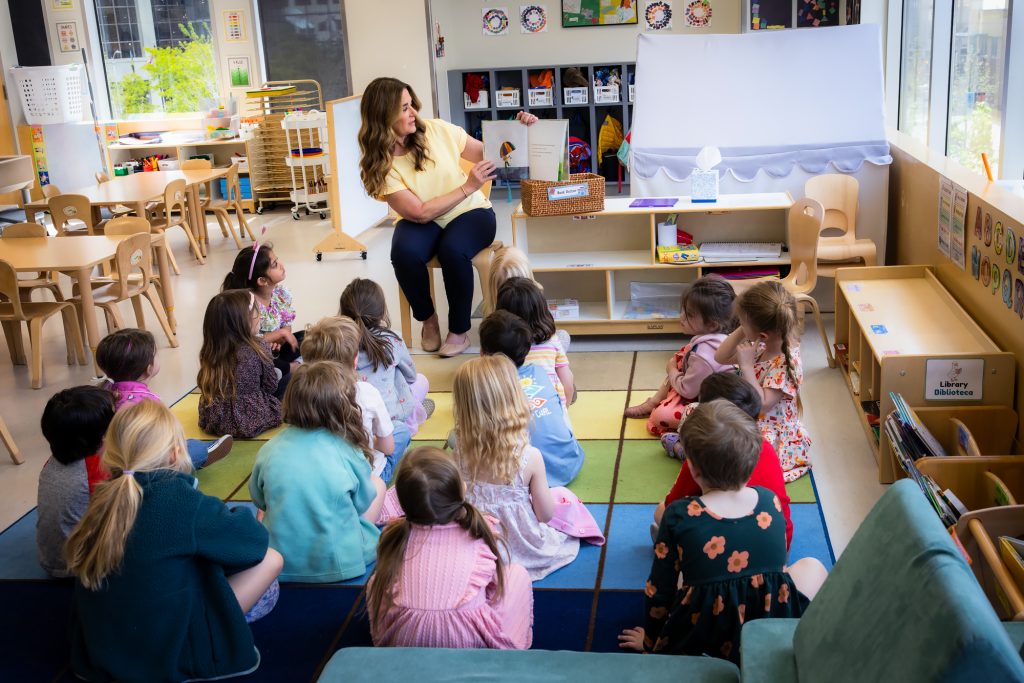
Photo courtesy of Pivotal
Tell us about some of the projects, ideas, or questions you’re currently working on.
Melinda French Gates: A big priority for me right now is improving women’s health.
So many women have either struggled to find the health care they need or know someone who has. Those stories, unfortunately, are all too common. What we don’t have nearly enough of is data. So my team at Pivotal partnered with Gallup to conduct one of the most expansive surveys on women’s health and opportunity in the United States and the UK.
What we found reaffirmed the unacceptable reality that so many women are living with. Half of women in the U.S. have had a negative experience seeking healthcare, whether they’ve been misdiagnosed, had their pain dismissed, or left their doctor’s office with zero recommendations for next steps. Two-thirds of women who couldn’t get the care they needed told us their health had negatively affected their careers, and the majority said that not getting the care they need affected their ability to participate in their families and in their communities.
These issues aren’t unique to the United States either. In the UK, 44 percent said their health kept them from doing everything they want in life, with the lack of support for menopause in particular having a major impact: 1 in 4 women in the UK said that challenges related to menopause caused them to take extended leave or leave their jobs entirely.
One thing I want to be clear about is that the problem isn’t a lack of caring among physicians. I’ve heard from so many doctors who deeply want to help their patients but don’t have access to the training, information, or treatment options they need to do so—because women’s health has been chronically underfunded and under-researched.
That’s why I’ve committed more than $600 million to women’s health over the past two years. Part of that funding is helping women get the care they need right now, including reproductive and maternal health services and mental health care both in the U.S. and around the world. Some is going toward entrepreneurs and innovators building better models of care for women, such as expanded access to telehealth. And we’re focused on accelerating research in areas that have been overlooked for far too long, including heart disease, autoimmune disorders, and menopause.
Women everywhere deserve a healthcare system that sees them, listens to them, and takes their health seriously. And healthcare providers need better training and tools to meet women where they are.
What are you most proud of achieving?
Melinda French Gates: I’m extremely proud of the work that the Gates Foundation did to help establish Gavi, the Vaccine Alliance, and all Gavi has done to save lives around the world.
Around the world, millions of children die every year from preventable causes. When we started the foundation, we knew that the solution wasn’t just developing more life-saving vaccines; it was making sure that children everywhere could benefit from them. For too many of them, the difference between being protected from a preventable disease and being left vulnerable to one depended entirely on where they were born.
Gavi was designed to change that. It took a lot of different groups coming together—governments, pharmaceutical companies, international organizations, philanthropists, healthcare providers—to help ensure that no child, anywhere, would die from a preventable disease.
Since its founding in 2000, Gavi has helped immunize more than a billion[i] children in 78 countries.[ii] The number of children dying before their fifth birthday was cut in half over twenty years. There are millions of people alive today because they were protected against measles, rotavirus, meningitis, yellow fever, and other deadly diseases.
Gavi worked. And it’s still working.
Tell us about a time when you had to take a big risk in order to move forward. What did that experience teach you about how to navigate difficult circumstances?
Melinda French Gates: In 2012, I spoke out publicly for the first time in support of contraceptive access.
Since I was raised Catholic, I didn’t want to go against the Church’s position on contraception. But I had met so many women who wanted to decide for themselves whether and when to have children. They told me about struggling to feed the children they already had. Not being able to afford contraceptives. And the health consequences they feared from having too many pregnancies too close together.
What’s more, I had benefited from using contraceptives in my own life, and I’d always taught my children to stand up for what they believed in. What kind of example was I setting if I couldn’t do that myself?
While there wasn’t an easy answer, there was a clear choice. I couldn’t ignore the women who had opened up to me. And I couldn’t disregard the overwhelming evidence proving that when women can make their own choices, families are healthier and more economically secure.
So, at a global gathering on family planning in 2012, I chose to speak plainly and publicly for the first time about the importance of contraception. And doing so taught me a lesson I still carry with me: Some risks are worth taking.
Since that summit, tens of millions[iii] more women gained access to contraceptives—but 164 million[iv] still need them. And at a time when reproductive rights are facing renewed challenges in many places around the world, I’m as committed as ever to doing what I can to protect those rights.
Are there any skills or interests that have turned out to be unexpectedly valuable in your career?
Melinda French Gates: Early in my career at Microsoft, I was one of the few women at the company, and the culture was pretty aggressive. Every idea was challenged, every meeting felt like a contest, and leaders were almost always very brash. I knew how to play that game. In fact, I was doing well and moving up in the company. But I realized I didn’t like who I was becoming.
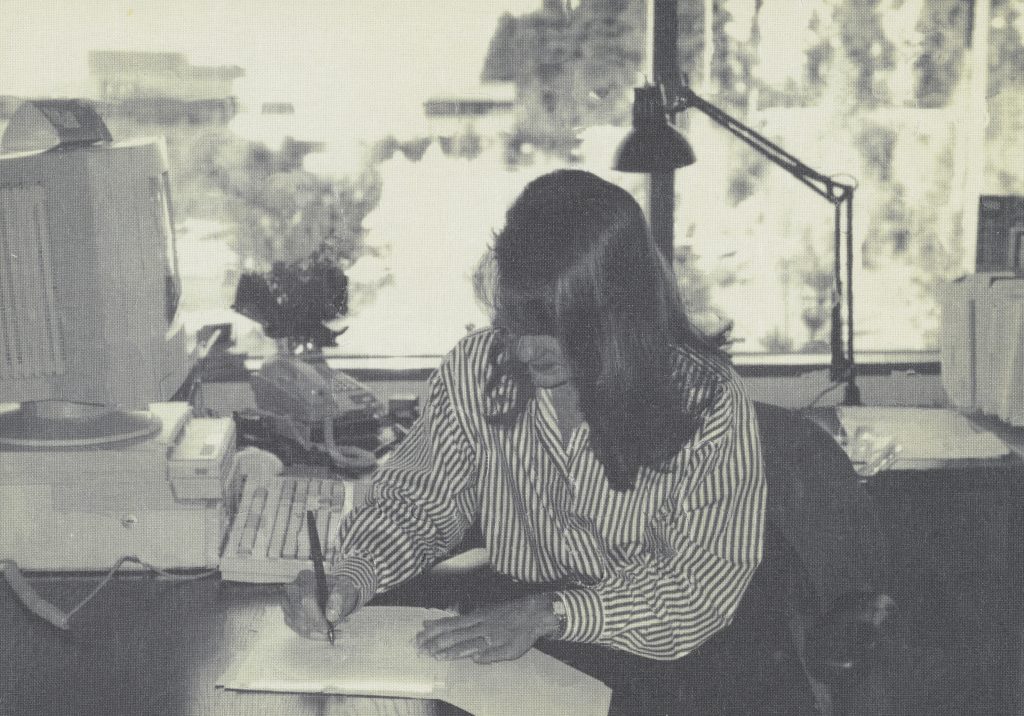
Melinda at Microsoft. Photo courtesy of the Gates Archive
At that point, I seriously considered quitting. But before I did, I decided to run an experiment: What if I just tried being myself? Instead of treating every discussion as a debate, what if I focused on being more empathetic—on listening to my team and trusting them to do their best work?
What happened surprised me. Once I stopped trying to imitate everyone else’s leadership style and started leading in a way that felt authentic to me, I became more effective, not less. People wanted to work on my team. They wanted to work in a culture built on trust, with a manager who had their backs.
I thought success meant adapting myself to fit the culture around me. What I learned instead was that you can get a lot further when you lead with your values. And I still strive to let my values guide my leadership to this day.
What book have you most often gifted to others?
Melinda French Gates: I just gave someone three books, because I couldn’t pick just one.
One was Theo of Golden, a novel I recently read and loved. It’s a sweet reminder of how our lives can be totally changed by the kindness of people we may barely know.
The other two are books I recommend often. They’re pretty different, but one has had a big impact on me personally and the other has been a big eye-opener for me professionally.
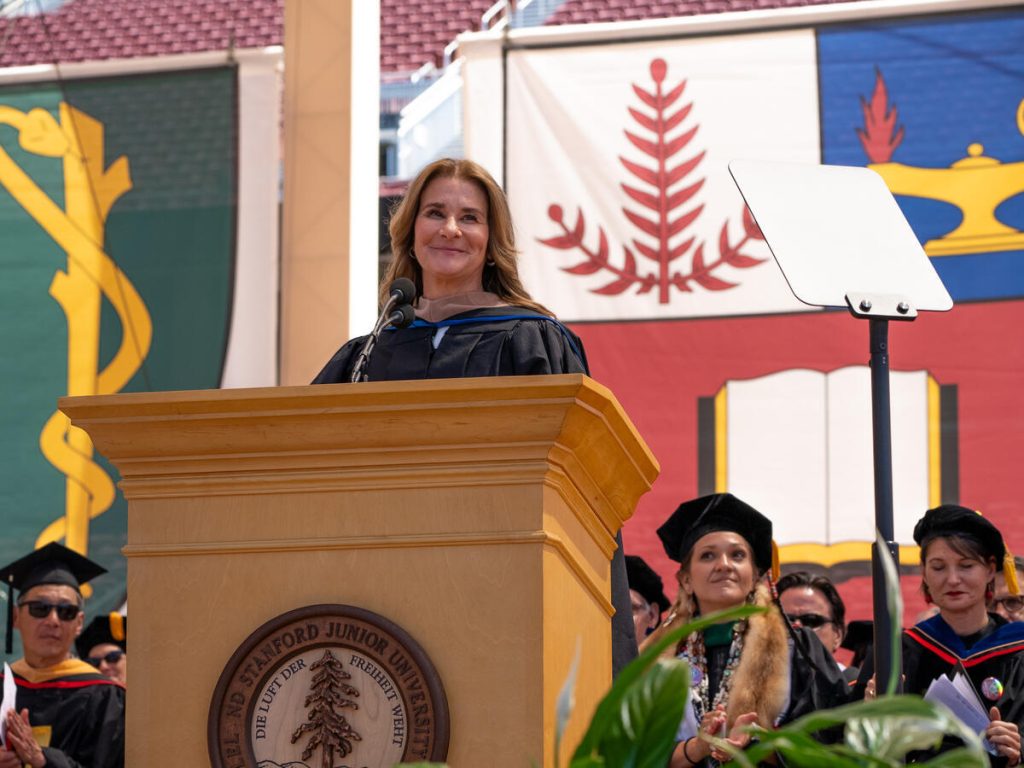
Stanford Commencement, 2024. Photo by Peter Shin for Pivotal Ventures
With its daily reflections on how to be more present and connected, The Book of Awakening, by Mark Nepo, is a book I can turn to no matter what season of life I’m in and get exactly the perspective I need.
Then there’s Invisible Women, by Caroline Criado Perez, which reveals how much of the data that shapes our world has historically overlooked women’s experiences. For example, it points out that even though men are more likely to be involved in a car crash, women are more likely to be seriously injured in them—because cars are designed and tested using male bodies.
What’s been an important part of your journey that others often miss?
Melinda French Gates: I wouldn’t be where I am today without close female friendships.
There’s a group of women I’ve known for decades, and we go on a morning walk almost every Monday. If we’re in town, we’re walking, catching up on our lives, and working through hard problems along the way. I call them my Truth Council, because I can always rely on them to give me a perspective on my life that I’ve either missed or haven’t been willing to see.
Society tends to define women by their romantic relationships, but the friends we hold close help shape our lives just as much, if not more.
[ii] Partner countries
[iii] FP2030_2024-Measurement-Report-Brief_Concept_Final.pdf
[iv] Family planning/contraception methods