“I’m just going to make it happen”:
Erika Burke Rossa on her career as a director
September 23, 2026
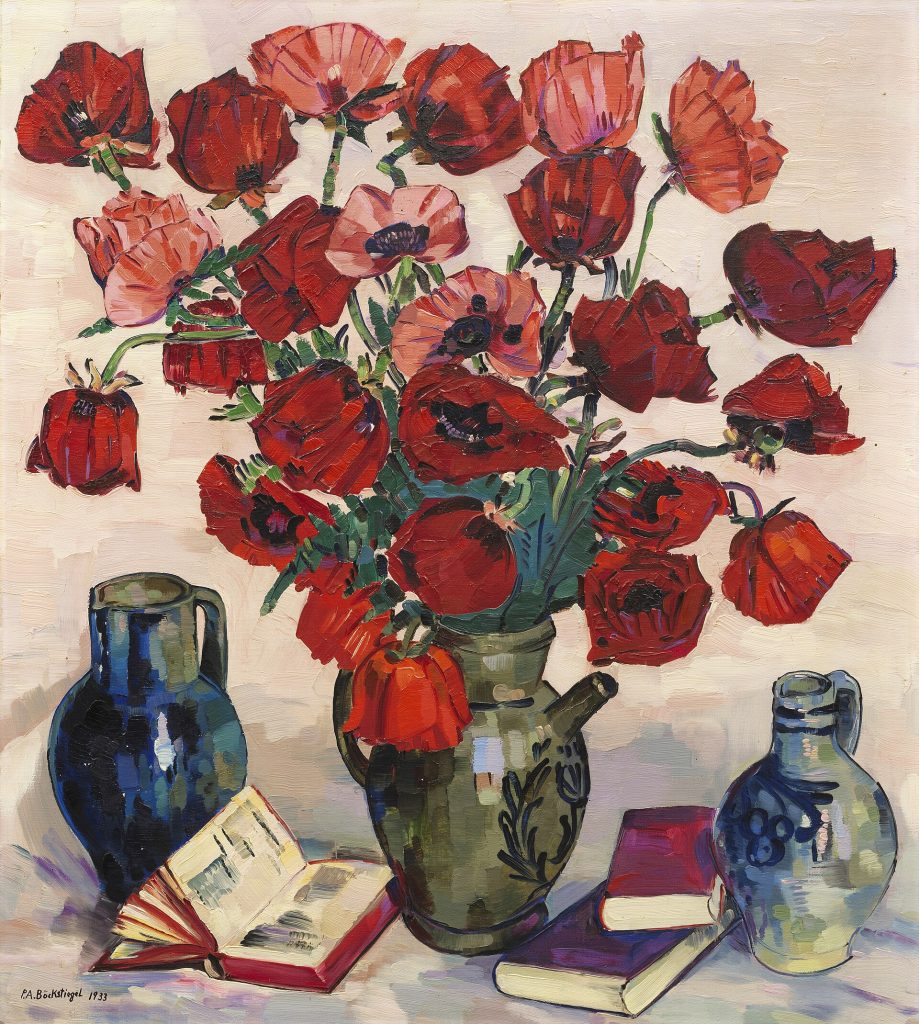
Peter August Böckstiegel, “Stillleben mit Mohnblumen” (1933)

Erika is precisely the kind of multi-hyphenate I’m always eager to learn from. Over the years, she’s built an expansive career which has included everything from dancing at Juilliard and working as an actor to earning a graduate degree in social work.
Most recently, she’s made her feature film directorial debut with the star-studded Rain Reign—a film for which she also wrote the screenplay—and just a few months after its debut at the Tribeca Festival she’s already in the process of finalizing the screenplay for her next one. It was a joy to hear more about how she got to where she is today.
Jana M. Perkins, PhD
Host, Women of Letters
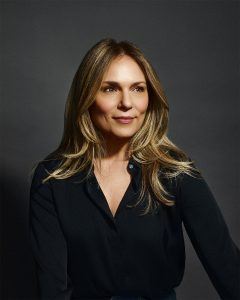
Erika Burke Rossa is a writer, director, producer, and actor. Born to a Moroccan Jewish mother and Irish Catholic American father, and raised in Hong Kong and Taiwan, her multicultural and multi-faith upbringing shaped her commitment to stories that reflect the world in all its complexity. She is a Juilliard-trained dancer with a BFA in Drama from NYU Tisch and a Masters in Social Work from NYU Silver School of Social Work. Erika founded the production company Rainbow Goat in 2022, with which she has several projects in development. Her most recent project is her feature film directorial debut, Rain Reign, adapted from Newbery Honor-winning author Ann M. Martin’s novel, for which Erika also wrote the screenplay. Produced by Rainbow Goat, With a Twist, and Long Odds, in association with City Hill Arts and Ley Line Entertainment, the film stars Paul Rudd, Jeremy Sisto, and Felice Kakaletris.

How did your childhood shape your ideas about what work looked like and what was possible for you?
Erika Burke Rossa: My mother was an immigrant to the States. She believed in education, so it was a really important piece in our household. My dad was in the Vietnam War, and he is from a huge family raised in Vermont; his mom’s side came in from Poland, and his dad had been there a while from Ireland. There was something about putting in the work—hard work and also optimism, like, “Sky’s the limit.” I think that really shaped my mindset, seeing them; they worked so hard.
We didn’t have a lot, but my mom was really creative. She was in education, but also an artist and a painter, and she would macramé: she would create spaces with beauty and an artistry, even with very little money and resources. It made me feel like, if I put in the hard work, anything was possible. They were really open and loving and supportive of anything I put my mind to.
I actually grew up in Asia. When I turned eight years old, we moved to Hong Kong and then to Taiwan. I grew up overseas, sort of internationally, like you, and when I was in Hong Kong I really got into ballet and studied at the Royal Academy there. I think ballet creates that foundation of hard work, because you literally have to be at the barre every day. Your technique is based on continuing that.

What’s the first thing you remember being good at?
Erika Burke Rossa: It’s funny—I was thinking about this. Tying shoes.
I learned how to tie shoes in nursery school, before anybody else could. My parents always tell the story: they would come pick me up from preschool, and I would have a line of like 10 kids around, and I would be on the ground tying everybody’s shoes. I don’t know what that says. I think I wanted some sense of independence; I was an only child for eight years, and my parents were really busy, and I was like, “I’m going to be hyper-independent.” Then it kind of helped me socially, as the go-to person who knew how to tie shoes.
Fast-forward to today. How did the path to what you’re doing now unfold?
Erika Burke Rossa: It’s sort of a long journey. I left high school and studied ballet, and I got into the Juilliard School of Dance in New York. I studied dance there, and I had a back injury. I realized, “If I continue dancing with this injury, I’m going to be sort of immobile shortly.” So I left and transferred to Tisch School of the Arts, in drama. I always thought I was going to be an actor, and I worked as an actor for a while and loved it, but being an actor is really hard. It’s hard to get work.
I had some things here and there, but as I started to get a little older I realized I really wanted to have a family, as well; that was important to me. I met my husband, and when I met my husband, I thought, “I’d like to have a job that interests me, that I can be creative, but I can give back to communities.” So I went back to grad school and I got a social work degree right as I was pregnant with my first child.
I had two kids sort of consecutively, but all through I was grappling with creativity and social work. I think there was some connectivity between the two, in terms of empathy and trying to understand what makes us who we are. As an artist, I like to look at that and put that out there in some sort of creative form. But then, as a social worker, it was really about getting into the systems and communities, and seeing how I could be of support or empathy or connect other people to resources they might not know of.
As I was raising my kids, I started writing. I always sort of wrote, but it wasn’t my first and foremost thing. I was more focused on being an actor in theatre, film, TV. When I had my kids, I realized it was hard for me to go on auditions and do all those things, so the writing became something that I could do on my own little stolen time—late at night when the kids had gone to bed, or if they were in school I could go and write in a cafe. The writing became that creative outlet for me.
This book, that is now my directorial debut, actually came to me through my first child, who brought it home as summer reading. I read the book at bedtime with them, and I was like, “I really want to turn this into a film.” So I messaged the author, Ann M. Martin—I don’t know if you know The Baby-Sitters Club series. She was on Facebook, so I messaged her and I said, “Can you please tell me: is this available, and who’s your agent?” She said it was available, and gave me the name of her agent. I reached out and got the option, and that is how I got here.
Jana M. Perkins: That’s incredible. I’m always astounded at the power of the cold email.
Erika Burke Rossa: Sometimes you just have to do it, you know? And actually, as a filmmaker, that’s sort of where you’re at, because you just have to talk to everybody about it. You never know who’s going to know someone that knows someone that’s going to connect you.
Fear—you just gotta put that out the window, or self-doubt, or whatever. I think, as I’ve gotten older, that is what I just don’t care about anymore. As a younger person, I think maybe I was more concerned about offending somebody, or asking the wrong question, or whatever. And as I’ve gotten older and sort of sat with myself, those things really don’t matter, because I want to seize the day. All of that has fallen away.
You, of course, have worked as a writer, director, producer, and actor, among the many hats you’ve worn. Which of those identities do you feel closest to these days, and is there maybe one that you want to be leaning more into in the future?
Erika Burke Rossa: When I directed this project, for the first time I realized that all the things I had worked on were all being utilized in a really incredibly satisfying way. For example, my dance training, in terms of musicality and rhythm, came into play in the editing room. With the music choices, where you would have a cut and where you would stop a scene—there was something sort of innate about that that I think was informed by my dance training.
As an actor, working with actors is just so delicious and incredible. That, to me, was so gratifying, because I had worked so hard at it. I really dove into it with some incredible teachers and was able to find that with the actors that we brought onto this project. I love interior design and painting, so the production design piece of it was incredible and satisfying, as well. That I hadn’t realized, because when you’re directing there’s a million and one questions that people bring to you every day.
I don’t know if you’ve seen that movie Marriage Story. Adam Driver, he’s on the phone, and they’re showing him pictures and he’s like, “Yes, no”—that’s how it is as a director. You literally, on the spot, are making quick decisions. If you have a strong sense of vision, that is so much easier; you can make those decisions really quickly, because you know innately. Somehow that was really fluid for me, and I enjoyed that.
So, yes: I’d love to keep directing more. I’m writing another script. I’d love people to bring me scripts, because the writing part is very hard. Writing is so hard, but also really satisfying when you write something. And who knows, maybe I’ll act again; maybe I’ll jump into that, as well. I’d love to dance again, but my body is not going to allow me to do that. Although, I was thinking the other day, I’d love to choreograph something.
Did you have any mentors along the way?
Erika Burke Rossa: Oh my gosh, of course.
My first real mentor was my dance teacher in Taiwan, and her name was Dona Mense. I just adored her, and we spent so much time together. Going to Taipei American School—in Hong Kong, I was part of the Royal Academy, and we had people from the Royal Ballet coming in, giving masterclasses. In Taiwan, it was just a small program, like a YMCA or something; it was called the TYPA. So it was just a little room, and there weren’t a whole lot of dancers. It was like an after school dance program, in a very sort of limited way, but because Dona had been a ballet dancer and just loved ballet she gave her heart and soul to that program. She really mentored us, and also gave us the sense of belief in ourselves, that it was something we could actually do. She made us believe that was possible.
My first real acting teacher was a woman named Susan Batson. I met her in New York through a friend from Juilliard, and she really gave me a sense of the love of the art and the artistry, and digging deep and telling the truth—she wrote a book called The Truth. When I was at NYU, Lauri Peters started a little company, and it was the beginning of the Meisner studio. She studied under Sanford Meisner, which is another acting philosophy, and I actually got to meet Sanford Meisner. She also really believed that I had what it took to go out and actually work as an actor. So even if I had that self-doubt, these three incredible women inspired me to keep going and believe that I had something to say.
Tell us about some of the projects, ideas, or questions you’re currently working on.
Erika Burke Rossa: I’m really curious about strong female characters—protagonists who have the cards stacked against them and persevere. I’m so curious about what it takes; how some people could come from just the worst of circumstances and have some inner resilience to continue and to change that, or to break generational trauma. I’m really fascinated by that. I don’t know if it’s mentors or parents or some external thing, or if it’s just some intrinsic innate place that some people just have that grit and that consistency. Those are the stories I’m really curious about.
I’ve optioned another book, and I’ve just completed a first draft of the screenplay. I’m working on the second right now, and I’m hoping to kind of get that off the ground and shoot this winter. The book is called What Jamie Saw: it’s also a young adult author, but I’m actually shifting the protagonist to the mother. It’s about a woman who flees a domestic violence situation, and it’s called “what Jamie saw” because it’s about what her son saw.
I think that’s really interesting, because how do we—I have a son—ensure that our young boys have positive examples, and how as mothers can we allow them to be the best men in the world they can possibly be? You know, break the lineage of toxic masculinity and move forward.
You also directed the award-winning short film The Happily Ever After—
Erika Burke Rossa: Award-winning, ooh [laughs]—that might be a little bit of an overstatement. But it did win an audience award. Thank you.
Jana M. Perkins: It won an award! That’s the definition of award-winning. What’s it been like navigating this newer role of working as the director of a feature film? Has that been what you expected so far?
Erika Burke Rossa: The scale is so different. I mean, that short film, it was $3,000. I was at SVA, and I was able to rent equipment, and I got a DP friend, and a friend of mine who’s an incredible actress said yes to do it—no money—and shot it in my apartment. You’re just like, “Okay, I wrote this thing,” which to me was sort of a poem that I wanted to see materialized visually. And then just sort of being like, “You know what? I’m just going to do it. I’m just going to make it happen.”
Which, interestingly, I think, was also the impetus to making this big feature happen. Like, “You know what? We’re just going to do it.” I think that kind of pulled me through. At the same time, a budget and well-known, well-established actors, and an incredible team, so the scale was quite different than shooting in my apartment.
But I came into it with the same sense of like—I mean, how can I say this? You’re like, “I’m just going to walk in there. What do we have here, and how can we make this work?” There was just this feeling like I wasn’t going to let anything fall through the cracks; I just wanted to take it all in. It was phenomenal.
How do you get your work in each day? What does that process look like, and what are the conditions that help you perform at your best?
Erika Burke Rossa: Both my kids are now in college, but they’re home this summer, so it’s like, “Everybody be quiet for a minute while I do a Zoom,” or whatever it is. Before, when my kids were home and I was writing, I would find the time during the day when they were at school, or between dropoff and pickup time.
I talk about Virginia Woolf—a room of one’s own—and sometimes I don’t feel like I had that luxury, of a room or a door to close where somebody wasn’t knocking or needing something. At the same time, where there’s a will, there’s a way. You’re like, “Okay: everybody’s in bed now, and now the brain starts going.” There’s a quiet moment.
My husband likes to get up early now and take that time. I’m not a great early riser, although it’s fine when I’m in production; I’ll do it. But that’s not really my normal rhythm. I like to get up and have a cup of coffee and sort of think and analyze, because writing is so much about allowing your brain to just kind of make associations. There’s a great deal of quiet contemplation. I think that’s necessary when you’re writing something, and that is a luxury when you’re a parent.
I work from home, so I just have a little office at home. We just moved, so I’m trying to create more of an office space now, but you can do it anywhere. You just have to have some moments of quiet.
What do you typically like to read, and what are you reading now?
Erika Burke Rossa: Because I’m working on this script, I’m not reading a whole lot right now because I’m deep into this project—What Jamie Saw. But I love books about strong female protagonists. I recently read Big Swiss by Jen Beagin, and Jenny Offill wrote this book called Last Things that I really loved recently.
I like fiction, and I love stories about women doing great things, or interesting things, or being heroic in some sort of interesting human way. I talk about this with Rain Reign: these quiet acts of heroism that are often not seen as these big grandiose gestures. The women I really admire have that, and I’m just curious about understanding what that is.
Jana M. Perkins: Do you find that you’re thinking about books differently now, as a director, in the sense of reading with the intention to possibly translate something into a film?
Erika Burke Rossa: I do. Recently, I got a lot of books that came in, because I was looking for the next thing that I was going to option. So now sometimes I’ll start reading something and be like, “I know I won’t do that one.”
I’ve been finishing books that I think I’d be interested in adapting, which is interesting because before I would read for pleasure and joy and just kind of to sit and not think about a work project. But now, it’s a thing; now I’m like, “Okay, if I’m going to take the time to read something, I’m going to be really fully invested from like page 10 and know that it’s something I’d be curious about adapting.”
But people have optioned the heck out of so many books now. So even if I love something—like, there was something I read, and I loved it. I reached out and I was like, “Is this available?” And they were like, “No, the script’s already written.”
Jana M. Perkins: This is super interesting to me; I’d love to hear more about the optioning process. So when something is optioned, it’s not necessarily going to become a film—they’re just reserving the right to maybe do that?
Erika Burke Rossa: Exactly. It is so hard, for an independent film, to raise financing and actually get something to go into production.
[So many books] immediately get into the hands of larger companies who are like, “Okay, this was a success.” Because a known IP is something that’s a little bit more easy to get people to back or to finance, they’re like, “It had an audience already. Now, how can we translate it to film?” A lot of times, bigger companies will do that for these bigger titles that have won awards, or the New York Times bestseller list, or that type of thing. They’ll get optioned pretty quickly; some books aren’t even published yet and they’re already optioned.
Jana M. Perkins: Oh my gosh.
Erika Burke Rossa: I know. So that’s why it’s interesting to think of books that are under the radar, or lesser-known. As a writer, finding a book that is lesser-known, or told in one way and then you’re able to kind of perceive it in another way—that is really exciting and interesting to me, because then I as a writer am able to bring my own perspective and my work to that piece.
Like with Rain Reign: the story is so in-depth, and there’s so many plotpoints that I had to follow, but there was this story about the brothers that wasn’t necessarily as fleshed out because it was through the young girl’s perspective. So that was something that, when I turned it into the film, gave me a great deal of joy to think about: what their backstories were, and how can I bring that to the screen.
When you think of women who have inspired or influenced you, who comes to mind?
Erika Burke Rossa: Personally, my mom. I think a lot of this is because of her in so many ways. She passed a little bit over a year ago, and she was my biggest champion. She was born in Morocco, really challenging youth, and had this optimism and this resiliency. Anyone else in her position might have turned to a really difficult life, or maybe not had a family—there’s many roads that she could have gone down due to her circumstance. And yet she just persevered. I am incredibly inspired by that. That is probably why I’m in this moment right now, because you write what you know; you write what is personal to you.
There are multiple female filmmakers that I just am so in awe of. Chloé Zhao is so incredible; I love the depths she goes with her actors, and the worlds that she builds, and the honesty and the texture and the truth that she’s trying to convey about the human experience. I really admire her work.
And, of course, Jane Campion. I mean, the list goes on; there are just so many amazing female filmmakers. At the same time, there’s not enough, right? It’s such a hard industry for women to break into, and then to see women get to the height of this industry and create these phenomenal pieces of filmmaking is so inspiring to me. I hope I can make great work.
Jana M. Perkins: I was going to say, you’re one of them.
What’s a commonly shared piece of advice that you disagree with, and why?
Erika Burke Rossa: “Play it safe,” or “not take risks.” You know—“do the thing that’s going to be the sure thing.” If parents are like, “Go into the medical field, or become a lawyer,” or whatever it is that seems like the path toward having stability or making money.
Life throws curveballs at you regardless of which path you take, so I tell my kids—one of my kids is in drama, as well, in theatre—I say, “Do what you are passionate about, and hopefully those doors will open.” And if it’s not specifically the way that you had imagined it—for example, with me, I thought I was going to be an actor, and that was the path. I did that for a little bit, but that wasn’t the path where a lot of doors opened.
There are many ways to have a creatively fulfilling life. You just have to be sort of malleable, or able to take detours and stay the course. That, to me, is more important than trying to do the straight and narrow of something that might, from the outside, look like the safe path. Nothing is safe.
How do you maintain momentum during slower seasons?
Erika Burke Rossa: That’s hard. When you’re creative and you feel a lot of things, I think it’s easy to sometimes go into darkness, or sadness, or depression—whatever that is, when you feel like things maybe aren’t happening in the time that you want them to happen in.
But I also think that what I’ve learned in recent years is sort of radical acceptance. The difficulty comes when you are expecting a different outcome, or that you should be doing something that somebody else is doing—there’s a friction in that. When you just accept where you are at any given moment and just kind of sit in it, everything shifts.
Nothing is stagnant. Even if you’re in a low-low in that space, there’s a kind of beauty in that, as well, because I think that space is also where a lot of creativity is born from. So I now just kind of try to accept where I am at any given moment. Does that make sense?
Jana M. Perkins: It does, and I think that’s beautiful. I often think of this quote that’s like, “How will you handle your valley experience?” Meaning, there are peaks and valleys—we all go through them both. When you’re down in the valley, how will you handle that so that, when you do get up again, it’s not like, “I was just rotting in bed for those two months.”
Erika Burke Rossa: Right, and I think it’s like seasons. If you look at the way the world is, in the seasons—we just saw the proshot of Hadestown. In fact, Anaïs Mitchell, with her band, has an original song in my film. She’s such an incredible artist. So I’m thinking of Hadestown right now, because it’s fresh in my mind, but it is about the seasons, right? The death of winter, and then the rebirth of spring.
Our rhythms can go like that, as well; our own internal rhythms. When you fight against winter and are like, “I should be in summer”—well, no, you shouldn’t. You should stay in winter, and you should allow winter to do what winter does, and sort of be at peace with that.
For example, we recently moved from New York to Chicago. It was really hard for me, because I have a robust community in New York City, and friends and creatives, and I fought against it. But when I allowed myself to just accept that this was where we were, and this is where we’re staying, and here we are—that’s when Rain Reign came, and sort of this prolific writing moment happened for me. So, again: I just think radical acceptance of where you’re at. That’s how you get through the valley.
Tell us about a time when you had to take a big risk in order to move forward. What did that experience teach you about how to navigate difficult circumstances?
Erika Burke Rossa: I think any sort of creative endeavour is taking a big risk. The fear of rejection—that you’ll send a script to somebody and they’ll say, “What is this?”
But I think, in the end, you have to, because you don’t know how something’s going to land with people. Also: art is so subjective. You just have to tell your truth and put it out in the world, and I think that’s the risk in and of itself. In making this movie, it was like, “Send it to so-and-so, and see what happens.”
Those are the risks that can seem really daunting and scary. At the same time, like we talked about, it’s like, “You just have to do it. You just have to rip the bandaid off and jump.” Otherwise, you’re never going to get to the other side. So every risk is worth it, even if it doesn’t end in something spectacular.
Jana M. Perkins: I agree. I often think that everything is a win if the goal was to gain experience.
Erika Burke Rossa: Perfect. Exactly. I think success is process. So what you just said: if you take a risk and you’ve learned something, then it was successful, right?
Because what is success? People giving you great accolades? No. If you know yourself, and you know your worth, then that is neither here nor there. It can be great, but at the same time you might receive a negative review. Are you going to let that determine your self-worth? On both sides, it’s knowing yourself, and knowing that the journey is the success—the process is the success.
How has your definition of success evolved over time?
Erika Burke Rossa: When you’re a young actor starting out, and you have friends and you see them winning an Oscar or whatever, and you think, “Oh my god; I’m not there”—you’re like, “Is there something wrong with me? What did I do? Am I not doing something right? Am I not talented?” Self-doubt creeps in. But everybody has their own journey, and you make choices along the way in your life that lead you down different roads.
I really wanted to have a family, so the things that I can control in my life—I can’t control if I get an award, or I make another film, or this person likes my script or not. I can control the relationships I have with people in my life, and how I relate to them: if I’m kind, if I have empathy.
That is something that can be incredibly rewarding. Having a great partnership, being a great parent—and what does that mean? That’s the relationships you build in your life. When my mom passed it was like, “What was the life that she left? What was the success of that life? Was it an award?” No, it was the love that she instilled in others that has passed through her to us, to her grandkids, to hopefully her greatgrandkids, and how you can hopefully put positivity out in the world.
In that little bubble that you live in, in the community you build, maybe that elicits some change of warmth and kindness and it’s passed forward. So that’s my definition of success. It’s really not the external medals or any of those things; it’s the life and the relationships that you build with people.
Are there any skills or interests that have turned out to be unexpectedly valuable in your career?
Erika Burke Rossa: Liking interior design, or painting. Over COVID, I bought these big canvases. I painted a little when I was in high school; it wasn’t something that I really did, but I just thought, “There’s a lot of wall space.” Where we moved in Chicago, moving from a smaller apartment in New York, I was like, “We need paintings. So let me paint them.”
And I did. I just went to Michaels and bought these huge-scale canvases. There was something about that sort of can-do attitude, where there’s a need for something, that maybe I can just do it myself. Why not? I think that skill—the interest in design, the interest in visual design—helped me in my directing.
Jana M. Perkins: I can absolutely see the throughline there. Film is such a visual medium that to have that kind of background and ability must add so much.
Erika Burke Rossa: Rain Reign, the story itself was very dense, which is great for a film because it’s really a story: there’s a beginning, middle, and an end. Translating it to film, and having it be scripted, and wanting to also have this visual language, was such a wonderful experience. Now, with this next film, I want to see if I can kind of make the script less dense, in the sense that the quiet visual moments are doing the heavy lifting versus the words, because I think that’s what’s so fascinating in film. Especially if you’re a writer: you love words, and you want the words to be there, and then you direct something and you realize that it’s the space between the words, or the visual landscape. Building the world visually is so potent and important to tell the story in that medium.
As a dancer, there were no words, and you used your body to tell the story with the music. Maybe that’s another skill that translated to where I’d like to go in my directing, which is more trying to find the visual, wordless moments.
If you were starting now, what would you do differently?
Erika Burke Rossa: I feel like I am just starting now. [laughs] Aren’t I just starting now? That’s how I feel. I do. Because I really just made my first film.
If I could tell my younger self, I would have written more in my 20s and 30s, because I think I was waiting for the call. As an actor, there’s that sense of, “Oh, the agent’s going to call you,” or, “My manager’s going to call me, and then there’s going to be a job, and then that job is going to lead to whatever.” But—and I now tell my kids this—you create your own work.
I don’t know that I had that same sense back then. Also, the world was different; right now, people are making films with their iPhones. I didn’t have an iPhone. I don’t even know when I started having a flip phone. When I was auditioning, we used to have a pager, and it would be like, “Call,” and you would get to a pay phone and call your manager, and they’d be like, “You got a callback.” That’s how you found out, or you’d have those old answering machines. Anyway, I’m making myself sound like a dinosaur.
But I didn’t have that same understanding, to go and create your own work. There were people that were doing that at NYU that did understand that; for some reason, I didn’t. I think that maybe I was a little more waiting to be picked, or chosen, or something like that. Now, I wish I had just been like, “I’m doing it; it doesn’t matter.” You just go.
What keeps you going?
Erika Burke Rossa: This desire to seize the day. I’m thinking of Dead Poets Society, Robin Williams—when he gets up, and he’s like, “Seize the day. Suck the marrow out of life.”
I’m in my fifties, and this is a new chapter for me: to be a writer, director, and to have made a film. I feel like I don’t have unlimited time, so I really feel the need and the desire to create, and to seize this moment, and to put as much goodness or positivity or whatever it is that I am curious about and trying to grapple with into the world. That is really keeping me going.
Where can our readers find you?
Erika Burke Rossa: We’re in the middle of selling the film, so hopefully I will know soon where Rain Reign will be.
On Instagram, it’s @erikaburkerossa. I have a production company called Rainbow Goat, and I have a website: rainbowgoatproductions.com. That’s where my projects, things in development, or things that I’ve done are.