“I didn’t figure it out till I was 40”:
Candice Wuehle on her career as a novelist and cultural critic
June 18, 2026
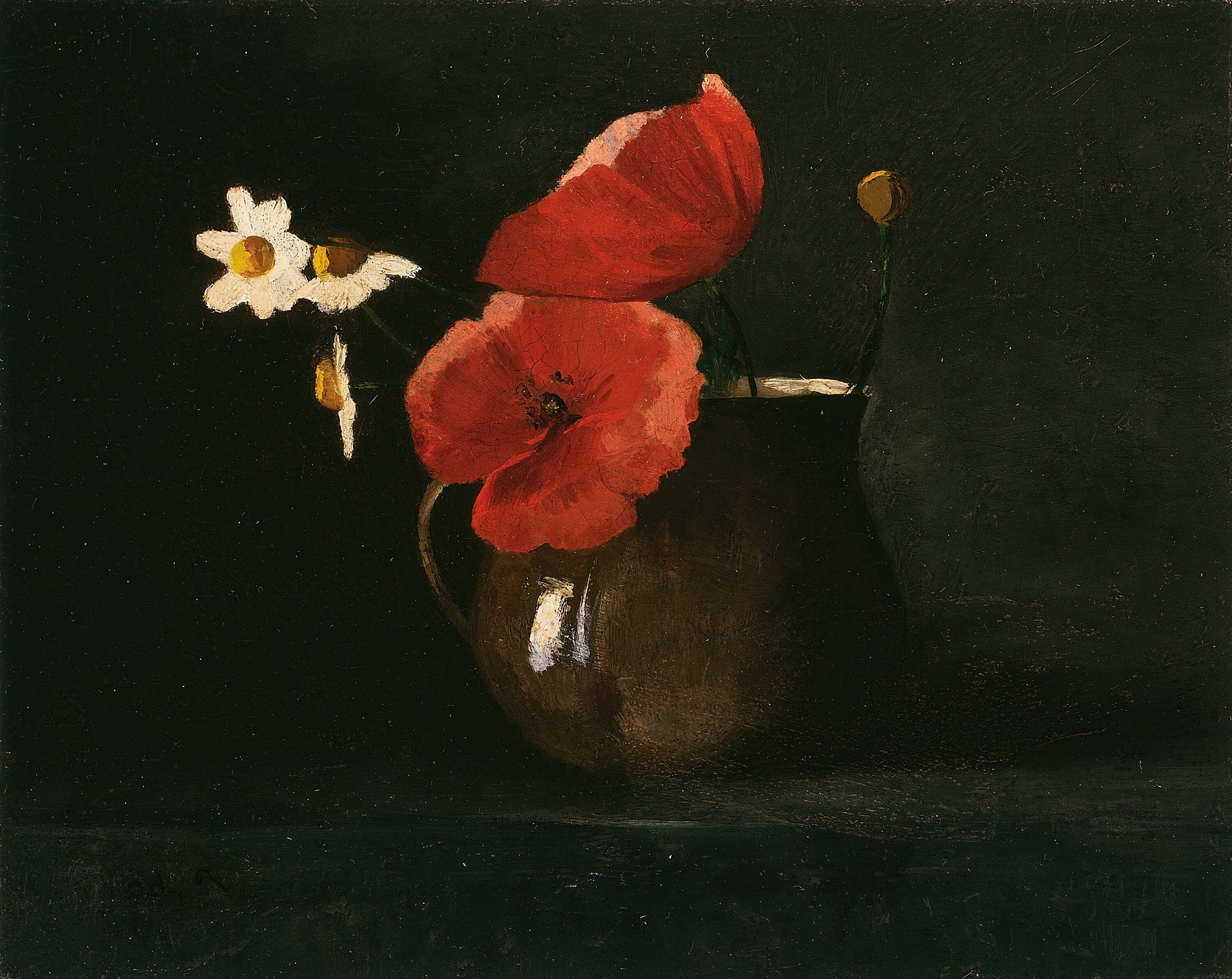
Odilon Redon, “Flowers; poppies and daisies” (c. 1867)
You can listen to this interview on Apple Podcasts and Spotify.
Candice’s latest novel achieves what her widely celebrated Substack has consistently delivered: a sharp, nuanced critique of a key cultural moment, rendered with her characteristic verve.
The book follows a pop star through her rise to fame in its examination of topics that have long been at the heart of Candice’s work, like how women in public are forced to become theorists of their own image or the intellectual labour that’s hidden inside pop culture. It’s a timely consideration that extends beyond the level of celebrity to also offer insight into the complexities of female friendship, what it means to wield power, models of mentorship, and the nature of success.
It was a joy to talk with her about all of that and more when we spoke.
Jana M. Perkins, PhD
Host, Women of Letters
Candice Wuehle is a novelist, poet, and instructor teaching in the Honors Program at the University of Iowa. Her first novel, MONARCH, was selected as a Best Book of 2022 by NPR and her poetry collection, Death Industrial Complex, was a finalist for the Believer Magazine Book Award. Her latest novel, Ultranatural, follows a pop star reminiscent of Britney Spears as her highly surveilled and tightly controlled life contracts dangerously. Candice also runs the Substack newsletter Bimbo Summit: A Pop Culture Study, where she regularly writes about our relationship to modern day celebrity. She is from Iowa City, Iowa, where she currently resides.

How did your childhood shape your ideas about what work looked like and what was possible for you?
Candice Wuehle: I grew up in the Midwest. I grew up in Iowa City, Iowa, and I still live here right now after teaching and going to school different places around the country.
It’s sort of a strange thing to grow up here, because Iowa City is a UNESCO City of Literature and the Iowa Writers’ Workshop is here. And I didn’t really realize that the whole world didn’t care about books and writing and novels—and didn’t make space and time for it—until I went away to grad school, basically, when I was in my 20s.
I think I had a little bit of a different experience than most writers, in terms of my relationship to just always feeling like it was a really valid thing to be doing. I started my career as a poet and was a poet longer than I’ve been a novelist now. You go other places and you realize that people think of that as something that people did in the 1800s. But it’s not that way here.
When I was in high school, some of my teachers were recent Workshop grads, and I would just see people like Jorie Graham or James Galvin out and about in town. I think that really shaped my idea of what the job could be, and just made me think that that kind of work was as valid as any other kind.
At the same time, no one in my family really is in the arts; my mom was in healthcare, and my dad owned businesses. They’re both very Midwestern hard workers, believe in just very stereotypical American values surrounding work. So I always wanted to do this thing that I think a lot of parents might consider kind of out there, except that we were here. My dad was always just kind of like, “Yeah, you can do it, but you have to work at it.” It’s only been sort of recently that I’ve realized how much that kind of support and attitude shaped the way that I approach writing. I’ve never been one of those people who thinks that inspiration has to strike; that just hasn’t been the case for me. It’s always been like, “If you’re going to do it, you sit down and do it every day.”
Jana M. Perkins: And then it was specifically poetry that you were initially interested in.
Candice Wuehle: Yeah. Mary Szybist, who wrote Incarnadine, which won the National Book Award, was my high school English teacher. I took all the classes that I could possibly take from her. She was so influential in terms of not just showing me a person who was living in the world as a poet, but encouraging me. I’ve heard so many writers say that they became a writer because one person told them they were good at it at one point, and Mary was definitely that person for me.
At the time, there was actually no creative writing undergraduate degree at the University of Iowa, which is where I did my undergrad, so I went here for literature. From there, I sort of decided in my graduating, early 20s mind that it would be more practical to get a Master’s in literature than an MFA in poetry. I tried not to be a creative writer and not to be a poet for a minute, but I ended up at the University of Minnesota and was working with great poets there. I ended up taking creative writing courses every semester, and then switching over with my dissertation to writing a creative dissertation.
There’s sort of a swerve there, where I ended up having a major neurosurgery. As I was recovering, there was a long recovery and a lot of pain medication, too, to cope afterwards. That was when I really got back to poetry, because I think there was something about the way that I was just navigating temporality, really, due to the pain and the medication and the recovery and some of the isolation that comes with a big event like that. So I just started writing poems again.
It was sort of what I was able to hold onto, in terms of just train of thought and image. And also there was sort of muscle memory that kicked in, that made me feel like I was able to start really thinking again. There are so few words for really extreme pain—you know, the sort of Elaine Scarry Body in Pain kind of idea—but I felt like I could explain it through poetry. So poetry took on this much more embodied role in my life for a while.

Fast-forward to today. How did the path to what you’re doing now unfold?
Candice Wuehle: Picking up from my MFA… From there, I decided to go ahead and get a PhD in creative writing at the University of Kansas. While I was there, I went for poetry; that’s what I planned to do, and I wanted to teach. What ended up happening was, basically, 2016 happened, and the world changed so radically.
I kind of remember that year and the following year as almost like episodes of a TV show, in terms of this transition to writing novels instead of poetry. I remember the election, of course, and I have a very vivid memory of the testimony of Christine Blasey Ford the next summer, and the Larry Nassar trials. I remember Chanel Miller and her testimony, and then #MeToo. Another two things that were happening that summer: I took a course in trauma studies with Cathy Caruth, who wrote Unclaimed Experience and sort of pioneered applying memory and trauma studies to literature. So I was thinking about that, and I was really starting to think about structures of how trauma changes the way that we remember. I knew that I wanted to write about that.
I remember sitting in my office in the basement campus of KU after teaching one day in the summer, and I thought that I was going to write another collection of poetry. I really thought that I was, like, writing the first poem, and that it was going to be a prose poem. I had this whole idea of what the book would look like, like you do. And it never, for me, ends up looking that way, but this looked really different. I wrote this prose poem in one sitting, and I realized that there was a narrator and that there was a plot arc in the prose poem. The line was, “She had the elocution of a child beauty queen.” And that line became my first novel, Monarch.
So I was thinking about all of these things that had been happening. And I was also thinking about my first experience really being aware of violence, and specifically violence against women or children, and that being the death of JonBenét Ramsey. So I had this idea to write a novel that was sort of like, “What if JonBenét Ramsey had lived and gotten revenge?”
I mentioned there were two things going on that summer. One was the trauma studies course, and the other was I started listening to the podcast My Favorite Murder. It had just come out, and it might even be the very first episode [when] Georgia—one of the hosts—covers the murder of JonBenét Ramsey. She briefly mentions conspiracy theories associated with it, and one of them is called Project Monarch. Essentially, what Project Monarch is—none of it is true, but—it is this theory that there’s an offshoot of the CIA’s MKUltra program, in which beauty pageant contestants are recruited to become sleeper agents for the government. There are a few women who believe that they were Project Monarch, and they all explain these periods of essentially long amnesia and then recurring images that come from that. Essentially, they’re describing the symptoms of PTSD, really, but they’re fitting it into this other sort of metaphorical narrative schema, I think, that they also believe is real.
But so those things—that’s just how creativity works sometimes, is just these different things from very different parts of your life snap together. It just made sense to me there, that I wanted to tell this story, and I had these very specific things I wanted to say. I knew that I was not the kind of poet who wrote poems like that. There are many, many, many great poets who can write that sort of argumentative, political poetry, but my poetry was always much more abstract, surreal, experimental, image-based. So that was how I started to wind up here, as a novelist.
Then I finished up my PhD and started teaching, and I got on the professor track. The novel was getting published, so I started getting jobs where I could teach fiction, as well, and wound up back here in Iowa City, where I now teach in the Honors Program at the University of Iowa. I teach creative writing courses; I teach the University of Iowa’s Taylor Swift course, which is a poetry course; and I teach a course on the philosophy of creative writing, as well as more honors curriculum courses.
But that really started as a staff job, administering scholarships, and then I just started doing add-on teaching, and it grew and it grew until it was a full-time position. It was not direct in any way. In fact, the direct paths that I’d been taught would get me to be exactly where I am now were very frustrating and did not work for me. Some of it was luck, and some of it was just sort of doing what I wanted to do and asking if I could do it, and finding situations to do it.
Jana M. Perkins: I’m really struck by your having had such a decisive shift from poetry to prose. Where do you feel yourself landing these days, now, of course, that you’ve written a few novels since that moment? Is that the identity that feels most aligned with what you want to do going forward, or do you still feel like there’s a pull to poetry?
Candice Wuehle: I’m struck by it, too, to this day. It feels like one of the strangest things that’s ever happened to me.
I never expected to write a novel. To be completely honest, every time I would finish a chapter, I would think, “I wonder if I’ll write another. I don’t know what comes next.” Then I got to 50,000 words in Monarch, and I knew I had to finish it because I’d come so far. But right now, my identity is definitely as a novelist, and then there’s been a little bit, in the past few years, a shift towards cultural criticism through my Substack. I have a Substack called Bimbo Summit: A Pop Culture Study. I look at a lot of the themes that I write about in my novels, in terms of star theory and celebrity and what media tells us about ourselves.
Right now, I feel like I sit at that intersection of novelist and cultural critic, but it really imprinted on me that this shift in genre happened that I never expected. I’ll never say again, “I think that there’s [something] I wouldn’t do, in terms of art.” It was so impactful. I think there are very few things more impactful than truly surprising yourself. I would be surprised, but I entirely believe I could be talking to you this time next year and I’ll only be writing poetry.
Jana M. Perkins: I would love to talk a bit about your hugely successful Substack. How did that come about, and what has been the vision for it?
Candice Wuehle: Thank you. Like I mentioned, my job started as staff, administering scholarships, and I wanted to sort of have a creative outlet while Ultranatural was out on submission. I think, at a different time in my life, that would have come from teaching. But once you’ve taught for a long time—at that point, I’d taught for over a decade—you still have those impulses where you have those ideas, and you want to convey and teach people in a way.
My Substack started with a different name. It was first called—let’s see if I can remember… Kitsch! Camp! Schmaltz! Schlock! What I did with it was I would look at camp artifacts from the lens of Susan Sontag’s “Notes on Camp.” Every Substack, I would quote a part of her foundational essay.
I think the first Substack I wrote was on Gourmand perfumes, like perfumes that smell like dessert. I sort of thought about that as a cannibalistic yet campy artifact, of like, make yourself smell like food, right? That’s inherently kind of weird, you know? I was thinking of [how] Jessica Simpson used to have this line, in the early aughts, of body creams and whipped cream, but they were edible; they were meant to be eaten. So those were kind of the first things I was writing about.
I don’t think the Substack ever got over 400, but I was having fun, and I was writing consistently, and more and more I was starting to write about camp cinema. Like when Barbie came out, that seemed so obvious that I would write about that. Then I started to get more traction writing about things as they were happening. It was so fun. It’s a great lesson; this is one of the only things I’ve done in my life that was not to professionalize, it was not a side hustle. It was for fun. I didn’t hold myself to any standards of, like, always publishing at the same time. I would even put in the subscribe page, like, “I might not publish one month. This might be this long. It might be this long. I don’t know.”
Then I started working with Leigh Stein, who wrote her most recent novel, If You’re Seeing This, It’s Meant for You. She wrote Self Care. Leigh is awesome, and she’s a great digital marketer and writing coach. I started working with her to sort of build up to promotion for Ultranatural about two years in advance, like right after I sold the book. Leigh said that she thought I should rebrand the Substack. I remember we had an hour-long Zoom meeting, and I’ve never really had this experience with anyone but Leigh, but it’s like—if you’ve seen A Star Is Born, the recent Lady Gaga one, there’s a scene where Bradley Cooper and Lady Gaga write a song together in real time. That’s what it’s like when you’re trying to come up with titles or ideas with Leigh.
She’ll be like, “What was something you thought about all the time when you were a kid? What are your obsessions?” And then you riff from there. She’ll be like, “What would Sylvia Plath say about that?” So we were talking, and of course Ultranatural, my novel, is about Britney Spears in a lot of ways. So we were talking about that. We were talking about what I think of as the great millennial woman deprogramming, of looking back at the stuff that you grew up with in terms of America’s Next Top Model or those American Apparel ads. But, especially for me, the way that celebrities were treated, the way that Britney Spears was treated, for having a mental illness and a very demanding, stressful life.
So I said, “Bimbo Summit.” “The Bimbo Summit” was this famous headline of this photo where Paris Hilton, Lindsay Lohan, and Britney Spears all get into a car, and they’re fleeing paparazzi; they don’t want to be photographed. I think it was The Daily Mail runs this headline that says “the Bimbo Summit.” So it all got really focused from there, what I would be writing about. Leigh kind of pointed out to me that I’m already so immersed in pop culture and immediate cinema culture, especially. I’m always going to movies on opening night. I’m always reading whatever cool girl book just came out, just on my own.
I realized I had this ability to very quickly have a take on what was happening right away. I think the first thing that kind of started to blow up was I wrote a critique of Nosferatu, and sort of criticized it for partaking in rape culture at the same time that it presents itself as a feminist film in a lot of ways. So there were things like that that were getting traction.
And I have to say another huge part of the Substack getting bigger is Jessica DeFino and her Substack FLESH WORLD, which has 120,000 followers last I checked. Jessica restacked and published to her own Substack my very first Substack, on Gourmand perfumes, so that helped. And then Jessica just every once in a while would still restack or would mention me in her newsletter.
So I had a little base of about maybe over a thousand, and then I published a piece called “A Dark Day for Smart Women” the day Taylor Swift got engaged. And that was when I really learned what the internet can be.
It blew up. It got reshared by, like, radio stations in Spain, [and] many other people’s Substacks. Lots of people wrote really mean critical responses to it. There was equal amounts of incel culture and tradwife culture both attacking it. But then there were the thousands of people—thousands and thousands of people—who subscribed because of it. The horrible stuff is so loud the first few days that it’s happening, but then later on you can step back and realize, like, “This actually meant something to people who will hold onto it and remember it way longer than these people who just wanted to send me a death threat in the DMs because I said Travis Kelce’s not as smart as Taylor Swift.”
That’s how the Substack unfolded: a combination of having fun and a take. I think if you try for a long time, you start to figure out what your unique stride is. I didn’t figure it out till I was 40, but I feel like that’s where I feel really comfortable.
Tell us about some of the projects, ideas, or questions you’re currently working on.
Candice Wuehle: The base question that is at the heart of everything that I’ve done at least in the last 10 years has been, “Where do our desires come from?”
I recently saw this quote from Agnès Varda, the French filmmaker, and it was something like, “The first step towards feminism is realizing that they’re experiencing you, but you’re also experiencing them.” This is very much what Monarch is directly about: this idea that if you’re able to step back and look at the things that you spend your time striving towards and wanting, and ask yourself, “When did I start to want that, and why?” For me, and I think a lot of women of my generation and earlier, a lot of that came from what the media told me, what my education told me, in terms of how I should look or behave or fit in socially.
There’s a huge amount of time—time and money and effort—that goes towards looking and being the way that our culture tells you that you’re supposed to. And that keeps you from doing the things that you might want to do, but even worse than that is it keeps you from even knowing what those things might be. Even when I was in high school, I would notice that, me and my girlfriends, when we would have a crush on someone, it was all-consuming. I remember even having the thought back then of like, “What do boys think about? Because I think they think about other funner, more interesting things, because they’re not obsessing about someone who might not even notice them, and scheming to get the attention and validation of someone who probably has not proven themselves worthy to give it yet.”
So I picked up on that idea in a lot of different ways. In Ultranatural, it comes through the way that surveillance capitalism sort of disarranges priorities. I want to say maybe 2008 was when I got on social media and realiz[ed] that your mind gets colonized by the opportunity to make every moment of your life transactional in the attention economy. Back in the 2010s, when people were photographing their lunches and what they wore every day and the most minute details—you filter everything at some point through the eyes of other people, which is this layer of alienation and remove from what you might just be innately doing.
I’m not even saying that that is always bad. I think that filtering your life through the shared experience of people who you respect and have affinity with can be a wonderful thing. But we should all work hard to not just do that on autopilot for everyone. So those are the main questions that are driving right now.
Jana M. Perkins: I’m always so curious about the decisions that authors make around epigraphs. And I noticed that both of the epigraphs to Ultranatural are about work, which of course is really the central theme of Women of Letters. I would love to hear the story behind that.
Candice Wuehle: It definitely goes back to that surveillance capitalism idea. I was thinking about how magazines used to do this thing—when print culture was a much bigger deal, before it gave way to digital—almost every women’s magazine would do this thing where they would write down everything that a celebrity ate in a day.
So there was that; there was this tightly monitored thing there. But then I was also thinking about how shows like MTV’s Making The Video, and VH1’s had a different name that I can’t remember right now, but they would follow around a celebrity as they made the video and you would just see how much work that celebrity was doing. It would be a part of it; it was like this fetishization of how hard the labour was. It’d be like, “Britney is still flipping in the harness. She’s been doing it for five hours, and now she’ll have to go into makeup for something else, and she’s not actually going to get in bed until five in the morning. She’ll sleep for two hours, and then she has to do a radio interview, and tomorrow she’s starting her next tour.”
There’s a lot of that in Ultranatural. The novel is much more about the work that goes into the making of the album, and the making of the career, and the work of the making of the image, as opposed to really seeing her on stage. The beginning of the book has more creation of art, but there’s a lot of just the labour and thinking about why it was so important to emphasize and show us the labour of the celebrity at that time, and how much of the celebrity’s life starts to get shared, and how the celebrity shares their internal world, too, like what they’re doing at home.
You think of shows like Cribs, or like Architectural Digest now—the more that they can trade their interiority for attention, the more that we shift a little bit away from counting and partitioning and monitoring the harder labour aspects of it. Thinking about the different kinds of work that we do in that way was really interesting to me.
Can we talk about your Taylor Swift class and your forthcoming Taylor Swift book? How did those come about?
Candice Wuehle: The honest beginning of this story starts with my divorce. I began the divorce process at the end of 2021, and I was not a Taylor Swift fan. I didn’t dislike her; I just wasn’t a listener of Taylor Swift.
I have noticed everyone that I talk to about, like, “What was the song? What was the moment when you really became a fan of Taylor Swift?”—it’s because of some intense moment in their life, where a Taylor Swift song articulated exactly what was happening to them. And this is a definition of poetry. When you’re taking your GRE subject test, a definition of poetry that you can choose is when someone articulates an emotion that you did not know anyone else ever felt.
I think Taylor Swift does that probably every hour of the day for someone. I had that experience with the song “You’re On Your Own, Kid,” on Midnights, which had just come out. I started to listen to that full album, and it really just resonated so deeply for me. And then I just kept going into the catalogue, and I realized that she had such a massive body of work. I was reading her work in the same way that I had been trained to read Shakespeare, for example, or Sylvia Plath, because she writes in a way that lets you do that, where there’s so much of it: there’s such a large body, and images repeat, and ideas repeat, and they morph into different things, and they transform over time. The broad trajectory of what she’s thinking about becomes more complex and deep, especially in relation to things I was already very interested in, in terms of memory studies and trauma studies.
She does so much writing about time and the nature of time. I think the word ‘time’ is probably one of the top five words that shows up again and again in her writing. So I was thinking about that, and then the New York Times podcast The Daily did an episode. I believe it was called “The Unbearable Whiteness of Taylor Swift,” and it was about the Taylor Swift conference in Indiana, and basically they were talking about who has the right to girlhood. They were sort of comparing Beyoncé and Taylor Swift and different ways, culturally, that girlhood is conveyed, and who we still think of as a girl. That was all fascinating, but the bigger takeaway for me was that people are talking about Taylor Swift academically.
I was already thinking of her as a poet. I had my performance evaluation a couple weeks after that, and I just happened to say, in the evaluation, “I’d love to teach an intro to poetry class using the music of Taylor Swift, if I could do that.” That afternoon, all of the people who would have had to decide if I could do that or not wrote back and were like, “Yeah, do it. We would love that.”
So then it was happening. I spent the next four months putting the class together and reading critical articles about Swift, and then Eras went crazy. I feel like, that summer, in terms of the economic impact on cities—her changing for the better the economic state of everywhere that she visited, being a bigger influence than the Super Bowl. Articles started coming out about Swiftonomics, or the T-Swift Bump. That also aligned with what I was already thinking about, in terms of celebrity culture and star power on my Substack.
It just seemed obvious to me that she is the maybe final common text that we’ll ever have, in some ways, and a global phenomenon. Whether you like her or not, you do know who she is. And she is a flashpoint. There’s a reason that I wrote what was not even an especially controversial Substack criticizing her choice to get married and people cared. She just represents something so deeply to so many people that I thought it would be strange not to consider that academically.
So I taught the class, and then sold Ultranatural, and the editor, Meredith, at University of Iowa Press, who acquired Ultranatural, said she’d been trying to find someone to write a Taylor Swift book for a while, and asked me if I would write a proposal because she knew about the class. And I said, “Sure, I’ll try.”
I’d never thought about writing a nonfiction book, or a textbook, and I didn’t even really understand what the nature of the book she was asking for was. So I really struggled with that for a few months, and then sat down last summer and decided that what I wanted to do was write three chapters from three different sections of this book that I would use when I taught. Even if Iowa decided not to buy it, the time wouldn’t have been wasted. So that’s exactly what I did.
The form of the book emerged really cleanly from there, in terms of being a sort of poetry textbook where we learn about poetry from the lyrics of Taylor Swift. The first part is about craft elements of poetry; the second part is applying critical theories to Taylor Swift’s songs through gender theory, memory and trauma studies, etc.; and the third section is on fan theories and ideas of authorship, and thinking through Taylor Swift as this uniquely reciprocal artist who listens to her fan base and responds to her fan base and actually allows her music and her life, in some ways, to be influenced by what her fans have written. The line, in “You’re On Your Own, Kid,” “make the friendship bracelets”—that doesn’t exist unless Taylor Swift pays attention to her fans. I think that’s fascinating, and Iowa loved it. That turned out to have been the book that they were looking for.
Jana M. Perkins: Can I ask, what does the ranking look like for you? Do you have a top three of her albums that you feel like you’re always coming back to?
Candice Wuehle: Tortured Poets is my favourite. Life of a Showgirl came out after I became a fan, so for a while I was like, “Oh, it can’t possibly be my favourite. It’s just because it’s the most recent one.” But no, it’s my favourite. I absolutely love it.
I love the lyricism. I love how she plays with genre. I absolutely adore the way that she’s bringing in this dark conspiracy theory stuff. Some of the lines on Tortured Poets, like, “They’ll have to hire a priest to come and exorcise me,” or the bridge on “The Smallest Man Who Ever Lived”: “were you sent by someone who wanted me dead?” I think if you said that to the average person who doesn’t know a lot about Taylor Swift, or were like, “Who wrote this?”—they would never guess that some of those lines were from her. So that one.
I’m a huge Reputation girlie; that was just on repeat for—that was like my glory album for almost two years. I can’t really choose between folklore and evermore, because they feel so similar to me. But I think those would be my three, with kind of a cheat of combining two. What about you?
Jana M. Perkins: For me, it’s number one Reputation. For better or for worse, that is the one that most represents the feeling I have of moving through the world. Two is Midnights; three is Lover. But with two and three, I would say the ranking changes depending on what’s happening in my life. Loved Showgirl, loved Tortured Poets, but with Reputation, Midnights, Lover, I think I just have a higher proportion of songs where I’m like, “Absolutely, yes: any time, this is the soundtrack.”
Candice Wuehle: I mean, no skips on Reputation, for sure, or Midnights, really. I feel like Lover is so underrated, even though it has a couple of the megahits. I was actually just listening to Lover this morning.
When you think of women who have inspired or influenced you, who comes to mind?
Candice Wuehle: Both my grandmothers were big influences on this book. And honestly, Britney Spears was, too.
My grandmother Marge, on my mom’s side, was an Irish immigrant. She worked in a bar in the Midwest in the fifties and got paid under the table for quite a while. My dad’s mom got divorced and had two kids and worked in a factory, and that was during a time when you really didn’t get divorced around here, especially if you were Catholic.
These were two women who survived, but I also think about the fact that they couldn’t have a credit card, legally, until 1978. That feels so far away, but then you remember that within your own lineage you have this kind of financial and cultural oppression, and just the way that legal systems and divorce proceedings disempower women.
I’ve been very inspired by just the fact that they survived and thrived and built families. My grandmother on my dad’s side also struggled with bipolar her entire life, and there are some moments in Ultranatural where you see a character who is probably struggling with that disease, although it’s not named. It was important to me to represent that disease in a way that I haven’t really seen it represented in literature and culture very often.
I remember when the Britney Spears breakdown started to happen, and the Lindsay Lohan breakdowns, and I didn’t feel like that was very strange or far away from me. Even though they were ultrafamous, and what was happening to them was read as a result of the conditions of their ultracelebrity, there was a lot about it that to me—in terms of their mannerisms, their behaviours, their thought patterns, their decisions, their desperation—was really familiar.
I read Britney Spears’ memoir, The Woman In Me—which is really a very good memoir—and realized that she is very interested in that book in tracking not just the legacy of mental illness in her family amongst women, but the way that those women were silenced. She speaks quite a bit about her grandmother, who was very important to her, who ended up completing suicide, and the fact that her grandmother was institutionalized by her grandfather for being too difficult. And then essentially exactly the same thing happens to Britney Spears. So it’s like this repetition of this structure and this really violent cycle.
We still see Britney not doing great—the arrest earlier this [spring], still the erratic behaviour, in some ways—but you can’t say that she didn’t break the cycle. This woman did get herself out of that conservatorship, with the help of outside forces, and is now living independently. It’s inarguable that she is very aware of the structures and cycles that have produced her. You have to be aware of them to break them, and she did that. So I’m really, really inspired by that.
If you were starting now, what would you do differently?
Candice Wuehle: I don’t know that I could do anything differently, in terms of the actual way that I approached the craft or that I learned. There’s nothing about my education that I regret, even though a lot of it was not directly about creative writing. But what I would change is I would make more friends.
I spent so much time alone, working, because I thought that’s what you had to do to be a writer. But the truth is the biggest moments of growth that I’ve had as a writer have been…