“I never intended to publish it”:
Claire Jia on her career as a novelist and screenwriter
May 21, 2026
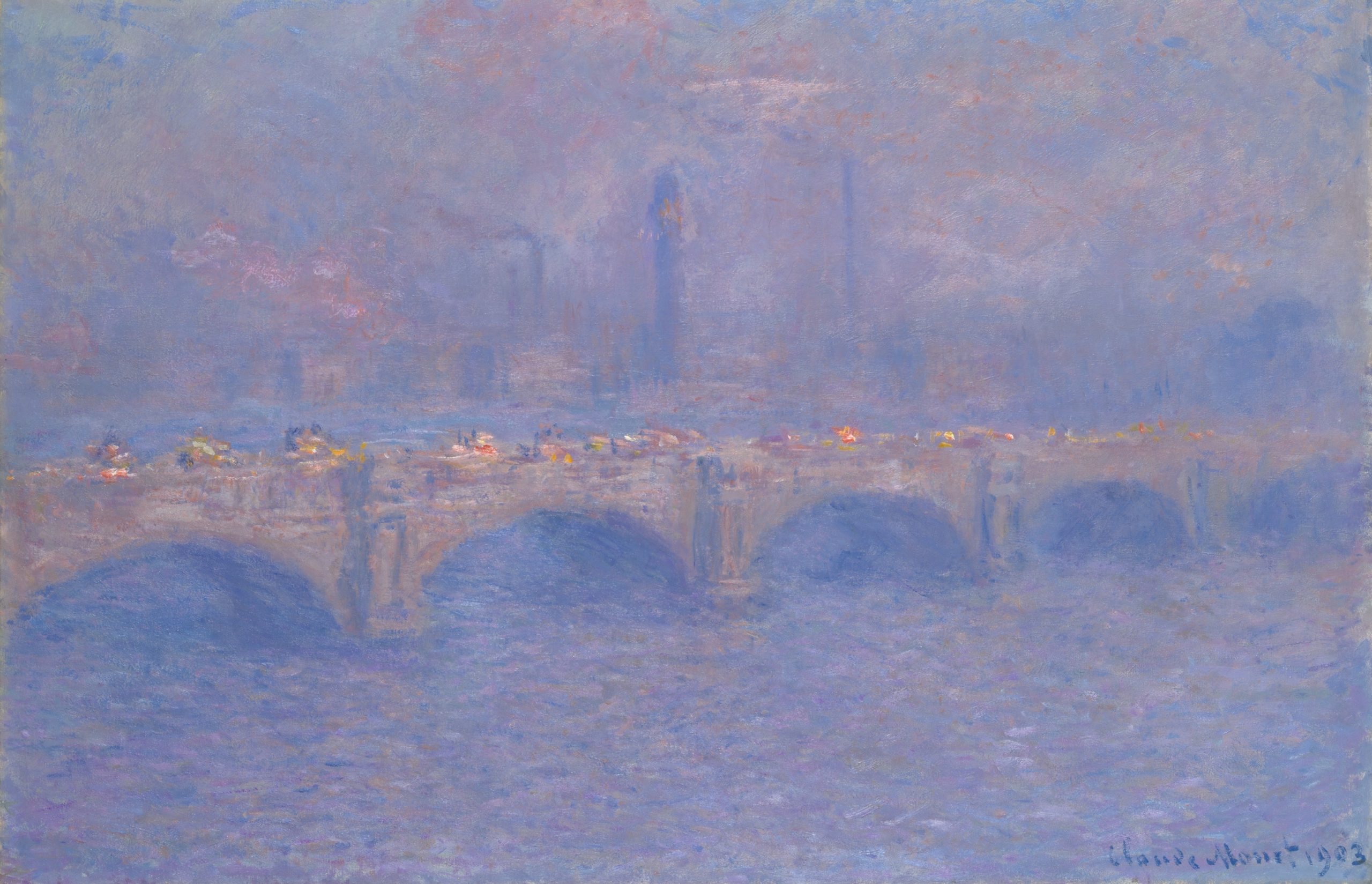
Claude Monet, “Waterloo Bridge” (1903)
You can listen to this interview on Apple Podcasts and Spotify.
If you’ve been a longtime reader, you’ll know that two of the subjects I most regularly gravitate towards in my personal reading are books about female friendship and books about the diaspora experience. So you can only imagine my delight at discovering Claire’s debut novel, Wanting, which contends with both.
In addition to having been called “Ferrante-like” by the New York Times Book Review, her novel has also been declared a best book of the summer by outlets ranging from LitHub to Harper’s Bazaar. I was grateful to have a chance to sit down with her and learn more about how her experiences living between two different countries as a Chinese-American have shaped the way she approaches her career.
Jana M. Perkins, PhD
Host, Women of Letters
P.S. I am so excited to be able to gift two copies of Claire’s amazing book, Wanting. Head over to our Substack to enter to receive your copy. 📚
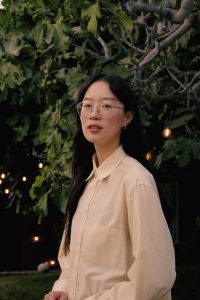
Claire Jia is a writer from the suburbs of Chicago. Her work has appeared in The New York Times Modern Love column, The Rumpus, Reductress, and more. She writes for television and video games, including the 2023 Peabody Award-winning We Are OFK. Her family is from Beijing, and there’s nothing she loves more than haggling for stationary in a chaotic Beijing marketplace. Today, she lives in Los Angeles with her friends. Wanting is her debut novel.
How did your childhood shape your ideas about what work looked like and what was possible for you?
Claire Jia: I had a very happy childhood. I always loved various kinds of art as a kid. My first love was visual art. I loved drawing—I did a lot of drawing and painting as a kid and teenager.
I discovered writing probably when I was eight or nine or ten. I don’t have a memory of how I started writing, but I remember my mom got laid off from her company in 2004. I remember her coming home and telling us—it was a big core memory for me—and I just remember hearing the news and then running upstairs and being like, “I’m gonna write a poem because I need to support my family now.” Which was hilarious, that I thought poetry could do that.
That was really something that I remember very, very clearly, and that was when I was around 10 years old, so I must have discovered writing before then. Throughout middle school, I loved writing with my friends; my friends and I started writing a fantasy novel together. [But] I think where my love of storytelling began has to be with my sister. My younger sister and I, we would craft these worlds together as kids. We would be characters, different animals that were related and lived in these cool fantastical places. Before we would sleep at night, we would just lie there talking about stories. That’s definitely where my love of storytelling began: a way to just have fun with my sister.
As I entered middle school, I just started actually doing something with it and then writing my fantasy novel. I feel like, as kids, that was the genre that we all liked. And I remember even then having big arguments with my friends about what the characters should be like. My friends felt that the villain should be a villain, and I felt the villain should have traits that were also sympathetic, because I felt that that made her a more real character. That has carried through to the writing that I do today. A lot of people call my novel very empathetic, and I think that anecdote really reflects [that]; I’ve always been someone who’s wanted to also illuminate the parts that should be forgiven in people and characters.
I did the writing and then I did art, but the visual art I feel like I was doing more seriously. I’ve taken art classes ever since I can remember, and I always saw myself more as a drawer, painter, illustrator, but I never quite connected with the medium. I liked it, but I don’t think I liked it as much as many artists do, and I wasn’t as good at it. I think I had a decent grasp of form, but my sister was always the one that was better with colour. I never quite got there, and so eventually I realized that, writing—there was something there for me. There was a spark that was there that wasn’t there with visual art, but I still didn’t take it seriously as something that I could do as a career.
As a high schooler and in college, I had big dreams to become the US ambassador to China. That was my very specific dream. I was extremely type-A as a teenager. Every single thing I did was for the purpose of going to a very good school, working for the State Department, or working for the United Nations. I was the president on the leadership committee of many clubs in high school: Model UN, human rights club, debate. I was doing seven different activities. I was taking a million AP classes. I truly never worked as hard as I did in high school, and I definitely burned out. I am the classic example of a burnout, because now I feel like I can barely handle doing one thing a day. I spent all my energy when I was 16 years old.
I went to Amherst College and I studied political science there. I had gotten into Georgetown’s Foreign Service, which is really what you should go to if your dream is to become an ambassador. But there was something in me that felt like, “What if I changed my mind?” And I was right: I did change my mind, though I often feel like if you feel like you’re going to change your mind, you will change your mind. Kind of manifest that indecision.
My last year of college, the spring before, I studied abroad in Paris. I met a film student and I was really jealous of what he got to do as a film student; he got to write and make a movie as his senior thesis. I was like, “Why do I have to write a boring research paper when I could do something creative?” And then that summer, my sister was applying to colleges, and she was going to art school. I was similarly envious of her now ability to get to spend her life making art, and then I realized, “Oh, clearly you want to spend your life doing this, and you’re only 20 years old—you can change your life in any way you want.” So then senior year, I decided to throw myself into my creative pursuits: I was in a play, I became a student photographer, I took a film class, I took a writing class. I really was like, “I’m going to take the best advantage of my last year of school.” And I just really wish I had treated every single year like that, because I just had the best time.
Originally, I was going to write a political science thesis about how propaganda influences the intimate lives of people in Beijing; I had spent that summer before senior year interviewing people in Beijing about their romantic and their sex lives. I came back and I was supposed to write a research paper, a traditional thesis, about that, [but] I realized I just didn’t want to, and I would rather write a novel. So I did that. My advisor was like, “This is not a political science thesis.” And I was like, “Then too bad.”
I dropped the thesis and I just finished it as a novel, and that’s the novel that you see today as Wanting. I never really intended to publish it; I just wrote it as a way of avoiding my responsibilities. But then I had a Modern Love essay come out, and a few months later after graduation got the attention of my agent. She wanted to work together on my novel, and then we made it a real thing. It took a long time; after she met me, we spent another seven years revising it, but then it finally happened. I feel like my entire writing career was a result of me just feeling like artists and writers get to have more fun, and I wanted to have that, too. And that’s true: we do have more fun, I think. At what cost, though? A lot of cost; a lot of financial cost. But it’s worth it, I would say.
Jana M. Perkins: This is going back a bit, but I’m really struck by that memory you shared about running off to write a poem to support your family after your mom was laid off. I think a lot of people who end up writing professionally start doing it in some way from a young age, but I don’t typically hear about them also having an awareness of, “Oh, this thing that I am good at, and that I enjoy doing, is also a thing that I can do to make money.” Where do you think that came from?
Claire Jia: I think maybe other people are just more realistic or not so naive. I think I felt like if I can do something, I can make money off it. Which is a hilarious thing to believe, considering it’s so hard for me now, as an adult woman, to make money off what I do.
When I was 10, I think I just had an awareness at that point. I felt that, in this world, work leads to money—which is a fiction that was debunked for me as I grew older—but I’ve always been very close to my family. And something that’s never changed in me is this desire to take care of the people that I love. I think I wasn’t thinking too hard about the logistics of how I was going to make money off of it, but I just felt like it was my responsibility. Or not even my responsibility; I just felt like I wanted to be the one to find some way to help my family. I had seen books for sale in the store, and why couldn’t that be me?
I wish I could see that poem that I wrote in that moment. But that was the reason that I did it: because I wanted to be helpful, and that’s something that’s always defined me. I wanted to save the day.
What’s the first thing you remember being good at?
Claire Jia: The first thing I remember being good at was probably just generally school. I was always very good at the things I was expected to be good at; it was when it became the things that weren’t expected of me that things got hard.
I remember, as a kid, I would just take so long completing tasks in school. They would always be really good quality, but I would take forever, and my teachers would comment on this. The teachers would talk to my mom and be like, “She’s really good at things, but she takes forever.” And that makes sense, because my book took around 10 years. So I am always the same child version as I’ve always been.
School wasn’t easy for me. High school was not easy, but it was something that came naturally to me. Like, I was good at school; I can recognize that I was very good at learning traditionally. So that’s the first thing I can really remember being good at, which has made adult life harder because I can’t list a skill, specifically, for you, that I was good at. I was just good at what the system wanted me to do, and now I don’t want to do what the system wants me to do. So what do I do?
Having to actually become really good at a skill is a different sort of challenge. Because, writing—I don’t know that I ever felt that I was good at. I don’t know that I feel that now. I don’t think I ever felt like I could be a writer until maybe my agent found me.
I remember, in college, one of my friends was in a fiction-writing class when he was a freshman. He had me read a story of his, and I read it, and I was like, “This is literally like astrophysics to me. I could never do this.” I remember feeling, like, “I literally don’t know how you do this.” And then I went and I did it, which is crazy. I still am bewildered at that, because I’m able to look at a short story now and feel a little bit less like, “What? How?” But I still have that sense of bewilderment.
Did you have any mentors along the way?
Claire Jia: My parents have always been such amazing supporters, and my sister. I’ve brought up my sister a lot in this interview; I feel like she’s always been someone that I look to. She’s my younger sister, but I feel like she’s just always been so creative, so much more decisive than me, so I definitely look up to her and seek her guidance on a lot of things. Her decision to go to art school greatly influenced my decision to become an artist-writer, as well. And my mom and my grandma; my mom’s mom. They were the people that really pushed me to learn Chinese, be really good at Chinese. That was their one desire for me: they didn’t really care if my grades were good, or whatever. They really wanted me to be good at Chinese.
When I was a kid, I pushed back against it, like every Chinese-American kid does. But that same year—I guess that year was pretty impactful—when I was 10, I went back to China; my mom took me back to China. It was just me and her, and I studied Chinese with my grandma for three hours every single day. It was torture, but the Stockholm syndrome worked, because by the end of the summer I realized, like, Chinese is my ultimate objective in life; I just really want to be good at this language. I realized sometime in there that Chinese is the way that I can be connected to my family, and without it I really can’t. So I threw myself into it after I got back from China. I skipped a grade in Chinese school. I started actually paying attention. I started taking pride. The big shift was just realizing this is actually really cool, and I should take pride in being good at it instead of being too cool for it. I became the best in my class, and I liked being the best at that. I guess that’s one of the first things that I learned I was good at, because I was one of the only people that really put effort into it.
So I would say my big mentors were my family, and then I have various mentors in LA—screenwriters. My old boss, Carrie Williamson: she’s always been a great mentor to me. She was my boss on the first show I was ever a writer’s assistant on, and she has always really believed in my work. I was 24 when I started working for her, so that was a confidence that I really needed, then and now. I definitely have had a lot of people guide the way for me, but it’s hard. I’m always looking for more; I’m always looking for guidance, because I wake up in the morning and I don’t know what to do every day.
Jana M. Perkins: I mean, it’s one of those things that it’s like a cup being filled and unfilled, right? As you move through life and as you’re encountering new scenarios and new opportunities, you’re always going to need someone who has already done what you haven’t yet done.
Claire Jia: It’s true. Absolutely. And I am really looking for people to guide me in this moment right now, actually. I mean, I’ve met so many people who have helped me walk the path since selling my book, and just in writing it. The publishing industry and the TV and film industry is very tough, and very wind-y, so I need all the help I can get.
Jana M. Perkins: No, we all do.
How do you get your work in each day? What does that process look like, and what are the conditions that help you perform at your best?
Claire Jia: I love when people ask me this question, because I’m truly the worst person to ask for any kind of advice about a daily writing practice.
I am extremely undisciplined as a person. When I was writing my book, sure: I would write it every day. I’d write it every day except the weekends, because I really drink the Kool-Aid of traditional systems. Except, for me: weekends, nighttime—that’s for the boys. But when the sun is up on the weekday, that’s when I’m writing. That’s my philosophy.
Ironically enough, I think I end up working harder in the summer because the sun is up for longer. During the winter, I’m not working because I don’t get to my desk until 10:30am, and the sun starts going down at 3. It’s like, “Well, that’s the day.” But, yes: I’m a very late riser. I can’t wake up early. Even though the times that I have woken up early, I feel like life is just bursting with possibility and I should do this every single day. I really love it. And I don’t do it, because I also love staying up late. My two great loves in life: staying up late and getting up early. But the staying up late is my one trip-up, so the getting up early—it’s just never going to win.
I really admire writers who are able to have a day job and write at night, write on the weekends. Some of my friends, they have day jobs, they write all the time, they have kids, they have hobbies, they work out. Like, that’s crazy. I can only do one of those.
What are you most proud of achieving?
Claire Jia: I guess the obvious answer is finishing my book. [But] the thing that I actually can say that I probably take the most pride in is I think I’m good at being a friend. That’s my life’s biggest accomplishment; that’s the thing that everyone remembers at the end of their life.
I’ve always really valued friendship and treating friends like family, or with as much esteem as a romantic relationship. For me, those are all just as important. I think that our society is built in such a way where your romantic partner is the most important person in your life. I always read acknowledgments, and I always feel really excited when the last person listed in an acknowledgement is not someone’s romantic partner. It makes me feel like, “Oh, this person looks at the world differently, or looks at the world in the same way as me.” But, at the same time, I don’t begrudge anyone for it. Our romantic partners do a lot for us, and also are huge parts of many people’s lives.
I think I’ve always felt this craziness about that my whole life, where I’m like, “I don’t want to meet a random man and then have that be the last person in my acknowledgments.” But it’s hard, because every person’s partner just starts out as some rando. I was talking with friends the other day about how your romantic partner becomes your best friend, and I’m like, “I already have best friends. I don’t need this person to become my best friend.” So I feel that’s the thing I am the most proud of, are the friends that I’ve made.
My novel, yes: I am very proud of that, because I decided to do it and then I finished it. It took a long time, but I’m proud that I finished it. It’s the best thing I’ve ever written. And then, also, I’m proud of just my career as a writer generally, because I feel like all of this was stuff that I just pulled out of thin air. I didn’t have any connections coming to LA. I didn’t know the first thing about writing a book, or how to get it published. [With] TV, I literally just would give my number out to random people and go to comedy shows—just talk to anyone, just go up to people and start speaking. I really went out on a limb, all the time, and was able to craft a career out of that. So I’m very proud of that, as well.
How has your definition of success evolved over time?
Claire Jia: I don’t know that I ever had a very concrete definition of success. Maybe that’s the problem. I feel like I’m not someone that’s ever really manifested, or that’s ever been like, “This is what I really want my life to look like.” Because I think, in a way, my life has always looked the way that I want it to look like.
I’ve been so lucky: I had such a great childhood, I have such an amazing family, I have amazing friends, I get to write. My life is amazing. I would say the main thing that I get anxious about is money. I’ve always felt like I need to make enough money, or make it enough that I can take time off and really not work for a while, not write for a while, and just go live with my grandparents for six months and spend quality time with them. I feel like that’s constantly what I want. Every time I hear that one of my grandparents is sick, it sends me into a spiral of like, “Oh my god, I need to be working harder. I need to be more successful.”
Success sort of just means making enough money in TV, as a TV writer, in order to then not have to work, or to work on a show that is long-running enough that I don’t have to worry about finding work for another year or so. Success, for me, just more and more involves a sense of continuing. But Hollywood as it’s designed is not meant to have you continue. It’s probably the industry that makes you look for work the most regularly.
If you were starting now, what would you do differently?
Claire Jia: I would have taken every single class possible to teach me how to write and be a storyteller.
I really loved the fantasy of being a writer who didn’t need to learn how to be a writer. I think that people can be amazing writers without having the academic background, or taking a million writing classes, but if you have the opportunity to you should do it. It’s not worth the romance of being like, “Wow: she never took a single class and then became a bestselling author.” The story is not worth the toil that it’ll take.
If I had taken more classes, if I had done an MFA, it just would have been much easier to build the networks, and learn the craft, and organize myself better to write something. I’ve been pursuing TV writing and novel writing, so I think it would have been difficult to throw myself wholeheartedly into either, but I could have maybe done an MFA and done screenwriting and creative writing classes. I would not have done an MFA in screenwriting; generally, people say it’s not worth the money. I would have just learned as much as I could have and not fallen for the fantasy of the writer that came out of nowhere.
I also would have really asked myself—and that’s what I’m doing now—like, “What do you actually want to do with your life? What do you want?” And, “If being a writer is what you want to do, what are the stories that you really want to tell?” So many things that we do in life are just based on a whim that we had that became real. I wrote my book just sort of for fun. It was not serious; I just needed to finish an assignment in college. I really never thought anything was going to happen with it. It was only when I published my Modern Love essay and…