“I knew I wanted to build my life around that”:
Melissa Febos on her career as a writer and professor
March 12, 2026
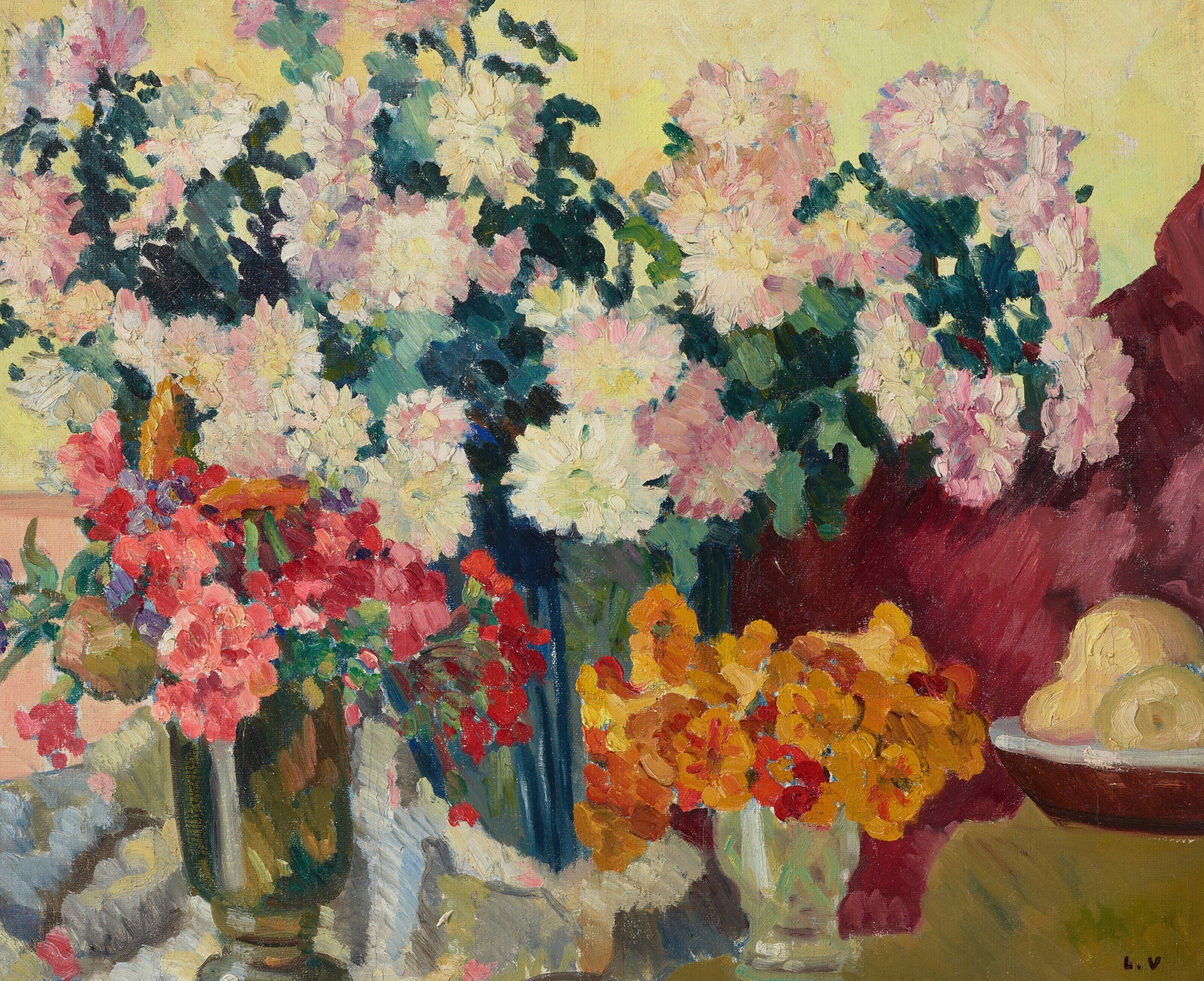
Louis Valtat, “Trois vases de fleurs, assiette de pommes” (1935)
Few writers possess the ability to command an avid readership for their every new release. Melissa is one of them.
All five of her books have been both critically acclaimed and impossible to put down. If you’ve been a longtime reader of her work, you’ll know that there’s just something about her writing—across subjects and even genres—that forces a singularity of focus toward the words on the page.
Jana M. Perkins, PhD
Founder and host, Women of Letters
P.S. I am so excited to be able to gift two hardcover copies of Melissa’s latest amazing book, The Dry Season. Head over to our Substack to enter to receive your copy. 📚
Melissa Febos is the national bestselling author of five books, including Girlhood—winner of the National Book Critics Circle Award in Criticism, Body Work, and, most recently, The Dry Season. She has received fellowships from the Guggenheim Foundation and the National Endowment for the Arts, and her work has appeared in The Paris Review, The New Yorker, The Best American Essays, Vogue, and The New York Times Magazine. She is a professor at the University of Iowa, where she directs the Nonfiction Writing Program.
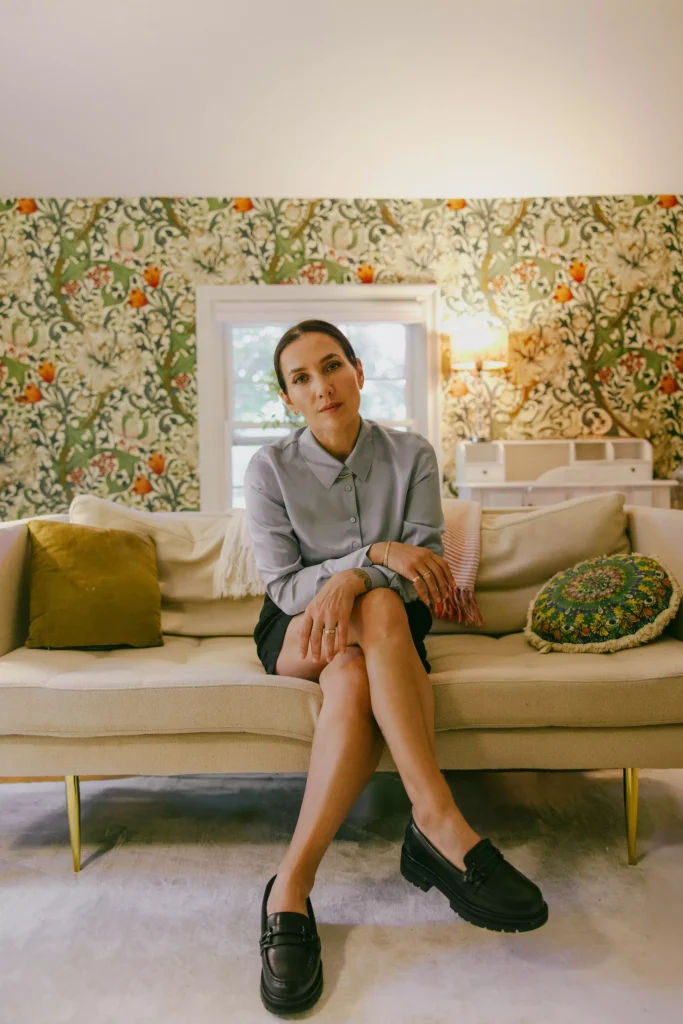
Photo credit: Karla Janette Monroe
How did your childhood shape your ideas about what work looked like and what was possible for you?
Melissa Febos: I was fortunate to be raised by two parents who, despite growing up with very limited resources, devoted themselves to professions about which they felt passionate. They both diverged from the paths offered to them and succeeded by their own terms. I was a weird, passionate kid who knew what I wanted to do very young and they always supported me, even when the path I chose looked like a radical diversion from what everyone else was doing. That has shaped how I approach my work, my deep belief that an unconventional path can be successfully forged through devotion.
I read books obsessively as a kid, and didn’t really distinguish between books for children and for adults. I knew what moved me, what transported me, what inspired awe in me, and I sought those works out. When I decided I wanted to be a writer (I was still a kid), I instinctively knew I wanted to create the kind of work that I craved. My favorite writers as a teen were J.D. Salinger (Franny and Zoey more than Catcher), Jeannette Winterson, Dorothy Allison, Toni Morrison, Alice Walker, Rita Mae Brown—obviously, finding queer writers was really important to me, but also women who wrote about painful subjects in beautiful ways, who made deep meaning out of their characters’ suffering.
What’s the first thing you remember being good at?
Melissa Febos: If by “good at” you mean fiendishly obsessed with to the exclusion of all other activities: reading. I suppose I always remember being praised for my verbal abilities. As a very young kid, I remember adults being interested in how well I could talk.
Fast-forward to today. How did the path to what you’re doing now unfold?
Melissa Febos: In some ways, I am a weird case. My life looks pretty close to what I imagined as a child.
I identified writing so early, and knew I wanted to build my life around that particular art form. I pursued it singlemindedly for most of my life, in that I prioritized it over nearly everything. Partly, this was possible because I felt so misfit for anything else. If I didn’t make it as an artist, what else would I do? And writing always provided a really singular sense of mental and emotional relief for me. Mostly, the self-forgetting it afforded, but also the space to work out and feel things I couldn’t anywhere else. It made sense to build my life around the thing that most facilitated my happiness and survival.
The thing about plans is that even when they work out, experience is never what we anticipate. Or, never what I anticipate. Writing is like this, too. I might write an outline, write toward a particular ending, might even know most of the junctures along the way. But the meat of it, the substance, is always a surprise, is always entirely new to me. My life has been like that, too. I’ve ended up in a place that looks, externally, quite a bit like what I hoped for myself, but I had no idea how it would feel, or what I would experience on the way here. My own substance is itself a surprise. A happy one, most days.
There’s a more mundane answer, about dropping out of high school, writing obsessively and badly for many years, going to college, getting sober, going to grad school, etc., but it’s not very unique. The interesting parts are the surprises, the meat of it. How it felt. I’ve had to write whole books to understand it myself.
Did you have any mentors along the way?
Melissa Febos: I had many great teachers, but I wouldn’t say that I had a mentor in the sense that I now offer mentorship to some of my students. Mostly, I think, because I didn’t learn to ask for help with much facility until I was already out of school. My mentors have been more in the spiritual sense than the academic sense. I was mentored most by literature and art, and by friendship, and through my longtime recovery from addiction.
Sometimes I lament never having fostered that kind of close relationship, but I do think that lack has informed my own work as a mentor. I have some mentees that I’ve known so long I consider them family. Perhaps I wouldn’t treasure them as much if I had been able to take for granted the presence of such connection in my own life.
Tell us about some of the projects, ideas, or questions you’re currently working on.
Melissa Febos: As with all my books, I’m writing the book I want to read. I’m writing a novel right now that is, in many ways, about mentorship—how artists, particularly queer artists, are mentored across time by the work of other queer artists.
It’s been so fun to return to fiction after publishing five nonfiction books. Fun and maddening. The tools are the same, in many respects, but the psychic process feels fundamentally different to me. I believe that nonfiction is my primary form, the process most suited to my own psyche in many ways, but fiction has always been my great love as a reader. The longer I write, the less choice I believe I have about what form my work takes. Within the structure of a work, sure, there are lots of choices to make. But for me, genre and content are not really chosen. They choose me. Even many of the daily choices in the process of writing a book are a process of elimination.
Now that I’m getting toward the end of the process, some essay ideas are popping up and clamoring for my attention, so I’m excited about that too. It’ll be a relief to return to some shorter forms.
How do you get your work in each day? What does that process look like, and what are the conditions that help you perform at your best?
Melissa Febos: I figured out pretty young (20?) that making art went against the grain of much of how we are told to live.
Many of us, especially women, are socialized to prioritize other people’s needs and wants ahead of our own. As workers we are encouraged to prioritize our labor for others over that for ourselves. I knew that in order to devote my life to art to the extent that I hoped, I would have to retrain my own mind, become comfortable with disappointing those expectations.
All of that to say that I write first, most days, before I look at my phone or email, before I speak to another person. I do not pursue relationships with people who resent the place that writing holds in my life. I write on airplanes and in parked cars and if I only have 30 minutes to do it. I used to lock my phone in a box with a timer, but now I use this little device called a Brick. Most days, I do my work first, and let the rest follow.
What do you typically like to read, and what are you reading now?
Melissa Febos: I mostly read novels—my favorite kind of book is a big, smart, propulsive, beautifully-written novel. But I also read a lot of essays, theory, memoir, and love a good literary mystery.
On my bedside table right now are: The Bee Sting by Paul Murray, Trauma Plot by Jamie Hood.
How do you decide which opportunities to pursue and which to pass on?
Melissa Febos: This has evolved a lot in the last ten years.
My default was yes for a long time. I would think of what I might miss if I said no. Operating that way burned me out over time. Decisionmaking from a fear of scarcity will usually do that to a body. I had a crisis with my health a few years ago that I now recognize as my body’s veto of my lifestyle.
But, health crisis or not, aging will often get us there, I think. Mortality gets more real as one ages, and in my forties I find myself considering more often, to quote the great Mary Oliver: is this what I want to be doing with my one wild and precious life? Like, do I want to be on an airplane or giving a lecture or writing a freelance piece? Sometimes, yes. But more often, no. I want to be with the people I love. I want to be in nature. I want to be at home. Nowadays, I try to think of what I will miss by saying yes.
What’s something you’ve had to unlearn from your formal education?
Melissa Febos: That there is a right way of reading, or writing, or doing most anything. The materialism of the word count—that only typing counts as writing.
Writing is integrated into every single part of my life, and it draws from every part. I grew up learning that our lives were segmented: a spiritual life, a writing life, a social life, a work life. But I have only one life, and all of these elements are intertwined in it. Writing is work, is spiritual, is social, is emotional, is intellectual, and so on. If I had to describe the work of my life in one word, it would be integration.
When you think of women who have inspired or influenced you, who comes to mind?
Melissa Febos: I have learned how to live and how to create from women who are obsessive and devoted to their beliefs and their work. Who often believe(d) in mutual aid over dependence on the state or institutions. Who refused to conform or were unable to. Among them: Audre Lorde, Heather Lewis, Mary Oliver, Annie Dillard, Jeannette Winterson, Toni Morrison, Adrienne Rich, Julia Serano, Dorothy Allison, Kathleen Hanna, Susan Sontag, Ana Mendieta, Joy Harjo, Sinéad O’Connor, Jane Goodall, Hildegard von Bingen, the Belgian beguines, Toni Cade Bambara, I could go on forever. All my dear friends.
How do you maintain momentum during slower seasons?
Melissa Febos: I take breaks when I need them. I show up, even when I don’t feel like it. I practice acceptance. I allow the work to be bad. It’s often bad, until it’s not anymore. When I’m not writing, I’m reading, making notes, keeping in touch with the places that the work comes from.
How has your definition of success evolved over time?
Melissa Febos: I always knew that the practice of writing itself was the point for me. But, when I was younger, there were also a lot of external things that I wanted. Then, I got some of those things and understood in a lived way what their value was and was not.
For a while now, I’ve really focused on the process, remembering to actively love it, even when it’s painful, because I do love it. I’m so lucky to get to do it. I’m grateful that publishing books has helped me build a life with lots of room to write, but most of all I am grateful for what the writing has been and done for me. It has kept me alive, and taught me how to love better. It has made me.
What book have you most often gifted to others?
Melissa Febos: Pema Chödrön, When Things Fall Apart. It saved me so many times! Our lives are guaranteed to fall apart, but we are often taught to respond to annihilation or suffering as a tragedy, as a problem to be fixed, when it is promised, and a necessary part of change. It’s so hard for me to hold onto that and this book has helped.
If you were starting now, what would you do differently?
Melissa Febos: I wouldn’t do much differently, because I don’t want a different life. I cherish the life I have and my mistakes were an indelible part of getting here.
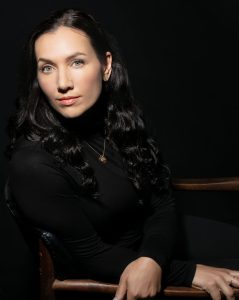
Photo credit: Beowulf Sheehan
The one bit of wisdom I would like to have come to earlier is: Slow down. The words I repeat to my students most often are: Slow down. You’re right on time. Writing takes so much longer than we are used to. Our society doesn’t really prepare us for the stamina or patience that writing a book requires. So, it’s a shock to discover how long we must work before we are rewarded by others (if ever we are!). It requires a different orientation to achievement and to reward. But that orientation has rendered me much more capable of happiness and appreciation. It’s made me better in every other conceivable way.
In a more pragmatic sense, also, I think it’s good to take one’s time. I was in a big hurry to publish as a younger writer and now I tend to think that the longer we wait, the better equipped we are to navigate the experience of publication. Publication is not a reward for writing; it’s a job, and not as fulfilling a job as writing. That can be shocking and demoralizing after all the years of writing and fantasizing about publishing as a kind of reward. Resisting the impulse to work toward that goal, to instead enjoy and be absorbed by the process is, perhaps ironically, the best way to build a sustainable practice and to find real success as an artist.
What keeps you going?
Melissa Febos: Friendship, writing, reading, meditation, recovery, and a whole lot of vegetarian protein.
Where can our readers find you?
Melissa Febos: I’m on Instagram at @melissafebos and www.melissafebos.com.